
 Save to Pinterest
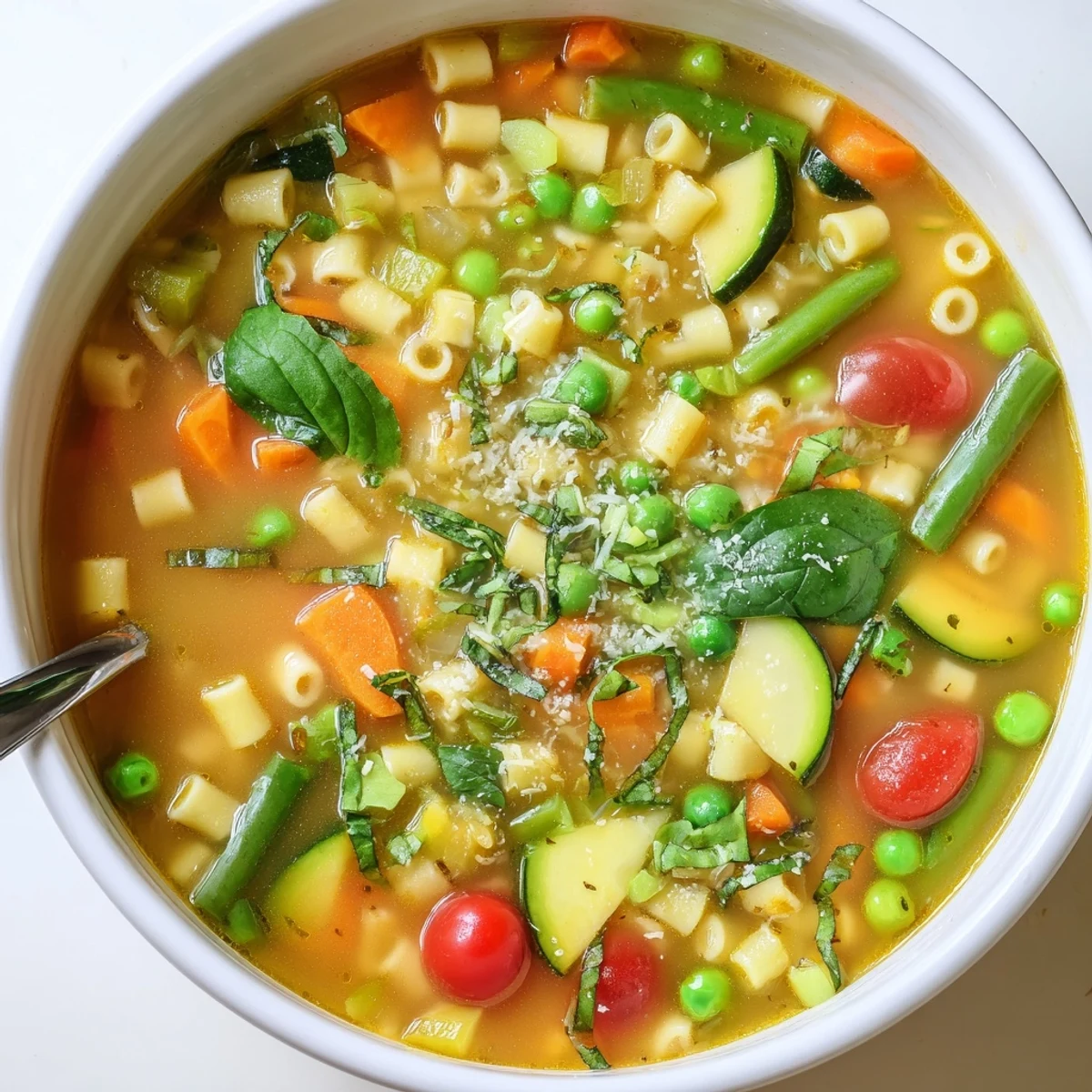
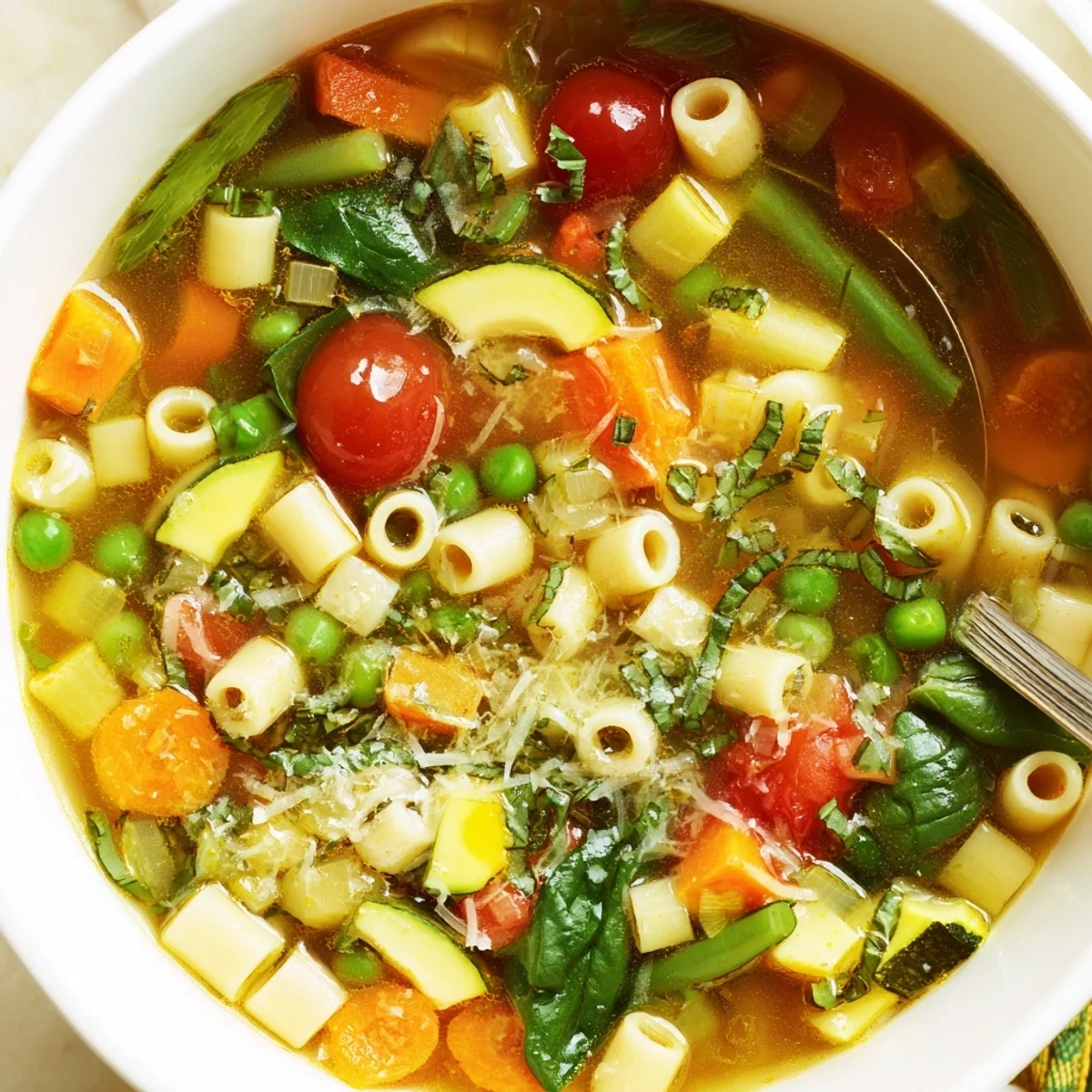
 This vibrant spring minestrone starts with sautéed onion and garlic, then adds carrots, celery, zucchini, green beans, peas and cherry tomatoes simmered in vegetable broth with small pasta until al dente. Stir in baby spinach and chopped basil, parsley and optional dill, finish with a sprinkle of Parmesan and a drizzle of extra virgin olive oil. Ready in about 50 minutes; swap seasonal veg or add canned cannellini for heartiness. Serve hot with crusty bread.
Every once in a while, the kitchen feels breezy and full of potential, especially when spring onions and sweet green peas are sprawled out across the counter. I found myself humming to the gentle chopping rhythm one afternoon, eager for that first bowl of minestrone that's equal parts garden and comfort. The smell of sautéed garlic and onion always signals something wholesome on the horizon. There's a certain energy in simmering a pot of soup that promises both nourishment and renewal.
I can still picture my friend teasing me as I fumbled cherry tomatoes onto the floor, insisting that five-second rules don't count in her kitchen. We laughed, quickly rinsed them off, and tossed them in anyway. Something about the steam rising from the pot while we stood barefoot made the soup even more memorable that day. Cooking together, we managed to turn the kitchen mess into a badge of teamwork and good food.
Ingredients
- Olive oil: The base of the flavor, so use a good quality extra virgin one for a fruity, peppery start.
- Yellow onion: Adds a gentle sweetness—the secret is in sautéing until just translucent, never browned.
- Garlic: Freshly minced garlic perfumes the soup; add after the onion so it doesn't burn.
- Carrots & celery: Together they bring classic Italian soup aromas and a slightly sweet crunch.
- Zucchini: Soaks up broth beautifully and stays tender—just dice evenly for even cooking.
- Peas: Fresh or frozen both work, but I love the little pop of sweetness from spring peas.
- Green beans: Trim and chop into bite-sized pieces to keep every spoonful balanced.
- Baby spinach: Toss in right at the end so it wilts but doesn’t turn mushy.
- Cherry tomatoes: Their burst of tartness really livens up the soup, especially in spring when tomatoes start to shine.
- Vegetable broth: Choose a low-sodium base so you can control the seasonings, or make your own for extra depth.
- Small pasta (ditalini or orzo): Cooked just to al dente, it bulks up the soup without overpowering the vegetables.
- Salt, black pepper, and red pepper flakes: Don’t be shy with the seasoning—taste as you go and tweak as needed for brightness and a hint of heat.
- Fresh basil, parsley, and dill: Stir these in last for an aromatic finish and that unmistakable springtime flavor.
- Freshly grated Parmesan cheese (optional): For creaminess and a salty finish; skip or swap for plant-based cheese if needed.
- Extra virgin olive oil for drizzling: My favorite finishing touch—just a thread over each bowl.
Instructions
- Sauté the aromatics:
- Warm the olive oil in your largest pot until it shimmers, then tip in the onion and garlic, stirring gently as you inhale the early smells of dinner. Give it a few minutes—when the onion is glassy and your kitchen smells like an Italian trattoria, you’re ready for the next step.
- Add the hearty veggies:
- Tumble in the carrots and celery, letting them soften while you stir and chat. Listen for that quiet sizzle and let the vegetables work their magic as they turn tender and fragrant.
- Layer in spring flavors:
- Slide in zucchini, green beans, and the cherry tomatoes you’ve halved—there’s something cheerful about seeing all those colors together. Cook just long enough for the tomatoes to start releasing their juices and the beans to brighten up.
- Pour in the broth:
- Add all the vegetable broth and turn up the heat until it comes to a lazy boil, bubbles just starting to break the surface. This is when everything melds, so let it happen slowly if you have time.
- Simmer pasta and peas:
- Toss in the pasta and peas, turning the soup into a true meal as it simmers for 8–10 minutes. Test the pasta as you go, making sure it’s got a gentle bite and the vegetables are pleasant and soft.
- Add spinach and finish with herbs:
- Lower the heat and stir in the spinach until just wilted, followed by basil, parsley, and dill. Season the soup to taste with salt, pepper, and a little red pepper flake if you like a subtle kick.
- Serve and garnish:
- Ladle the vibrant soup into bowls—don’t forget a healthy grate of Parmesan and a drizzle of good olive oil. Scatter over any extra fresh herbs and serve right away while it’s steaming and alive with color.
 Save to Pinterest
 There was an evening when I dropped a sprig of dill into the pot on a whim, not expecting much, and my partner paused mid-bite just to marvel at the flavor. It’s small moments like those that stick—a nod, a smile, the way a common soup turns extraordinary. Suddenly, the soup wasn’t just dinner, it was the highlight of a rainy spring night. Now I never skip the herbs at the end.
Finding Joy in Vegetable Prep
Chopping a pile of green beans or slicing tomatoes becomes a little meditation if you let it. I’ve found that prepping everything ahead means you’re never scrambling while something overcooks—plus, if you have help in the kitchen, it’s a perfect time for a little conversation. Even if your knife skills aren’t perfect, rough bits just add character. Embrace the mess and make it part of the fun.
Making It Your Own
I love swapping in asparagus or even a handful of shelled fava beans if I spot them at the market. Sometimes I add a can of cannellini beans for heartiness—no one in my family has ever complained. Don’t be afraid to experiment; this soup is forgiving. In spring especially, the more you adapt to what’s fresh, the better it will taste.
Serving Suggestions & Leftovers
Pairing this soup with a slice of crusty bread and a crisp white wine makes for a gentle celebration, no occasion needed. Leftovers keep well in the fridge for a day or two, though the pasta will continue to absorb broth and thicken—just add water or more stock to loosen when reheating. It travels beautifully in a thermos too, making an easy lunch for a day at the park.
- Don’t forget to taste and reseason before serving leftovers.
- Adding a swirl of pesto can really elevate the next-day version.
- If you want to make it vegan or gluten-free, easy swaps do the trick.
 Save to Pinterest
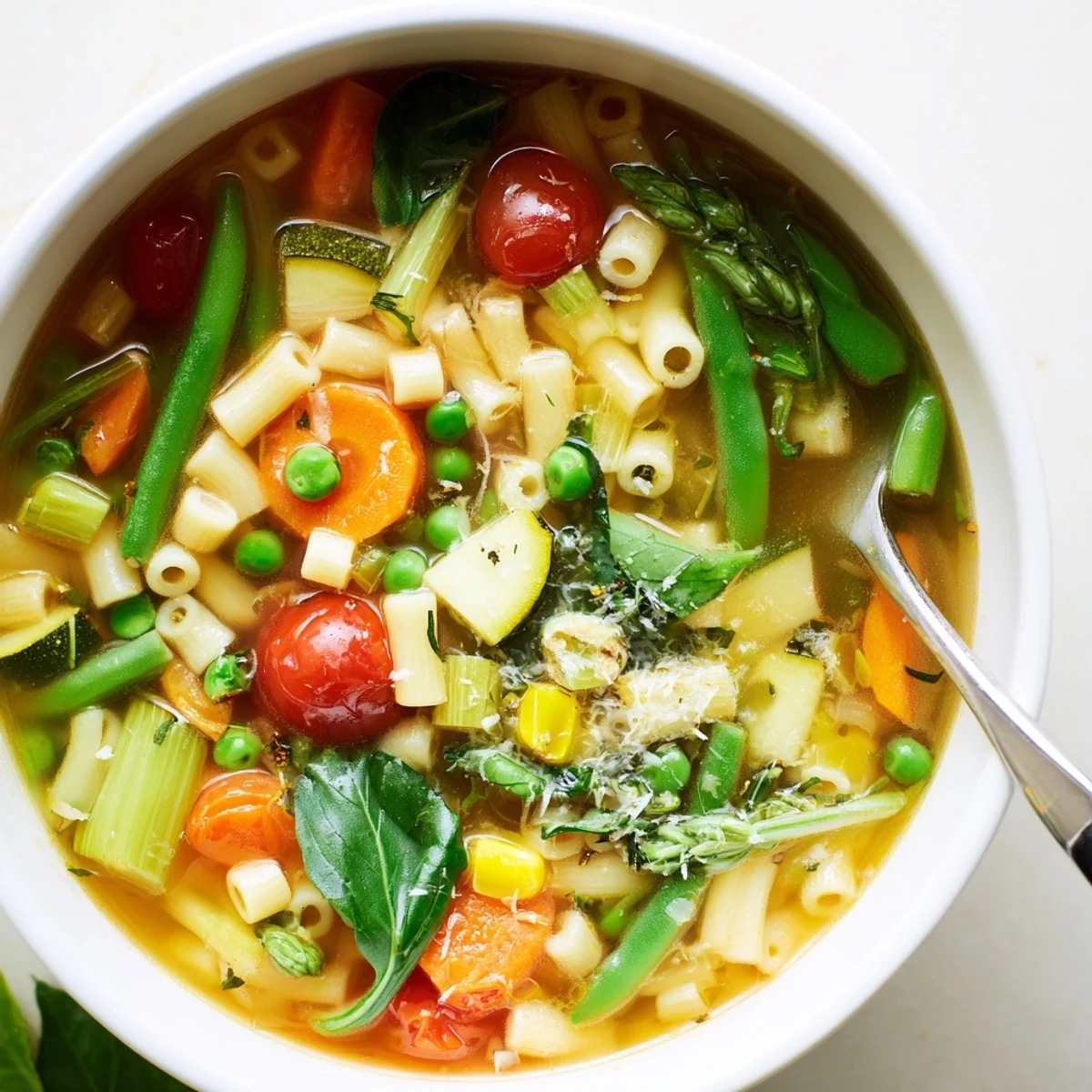
 I hope this bowl of spring minestrone brings as much lively flavor and lightness to your own kitchen as it has to mine. Enjoy every colorful spoonful.
Recipe FAQs
- → How do I keep the pasta from getting mushy?
-
Add the pasta late in the simmering stage and cook until just al dente. If storing leftovers, undercook the pasta by a minute to prevent it from absorbing too much broth.
- → Which spring vegetables work best?
-
Use a mix of tender vegetables: peas, asparagus, fava beans, zucchini, green beans and cherry tomatoes all highlight spring flavors. Swap based on what's freshest at the market.
- → How can I make this suitable for vegan or gluten-free diets?
-
For vegan, omit the Parmesan or use a plant-based alternative. For gluten-free, choose a gluten-free short pasta. Check labels for any hidden allergens in store-bought broth.
- → Can I add beans for more protein?
-
Yes—stir in canned cannellini or butter beans near the end to warm through. Drain and rinse canned beans before adding to keep the broth clear and balanced.
- → What are storage and reheating tips?
-
Refrigerate in an airtight container for up to 3–4 days. Reheat gently on the stove with a splash of broth or water, as the pasta will absorb liquid when chilled.
- → How can I boost the flavor quickly?
-
Sauté the aromatics until translucent, season gradually, finish with fresh herbs, a generous drizzle of extra virgin olive oil and a squeeze of lemon or a splash of vinegar to brighten the broth.