
 Save to Pinterest
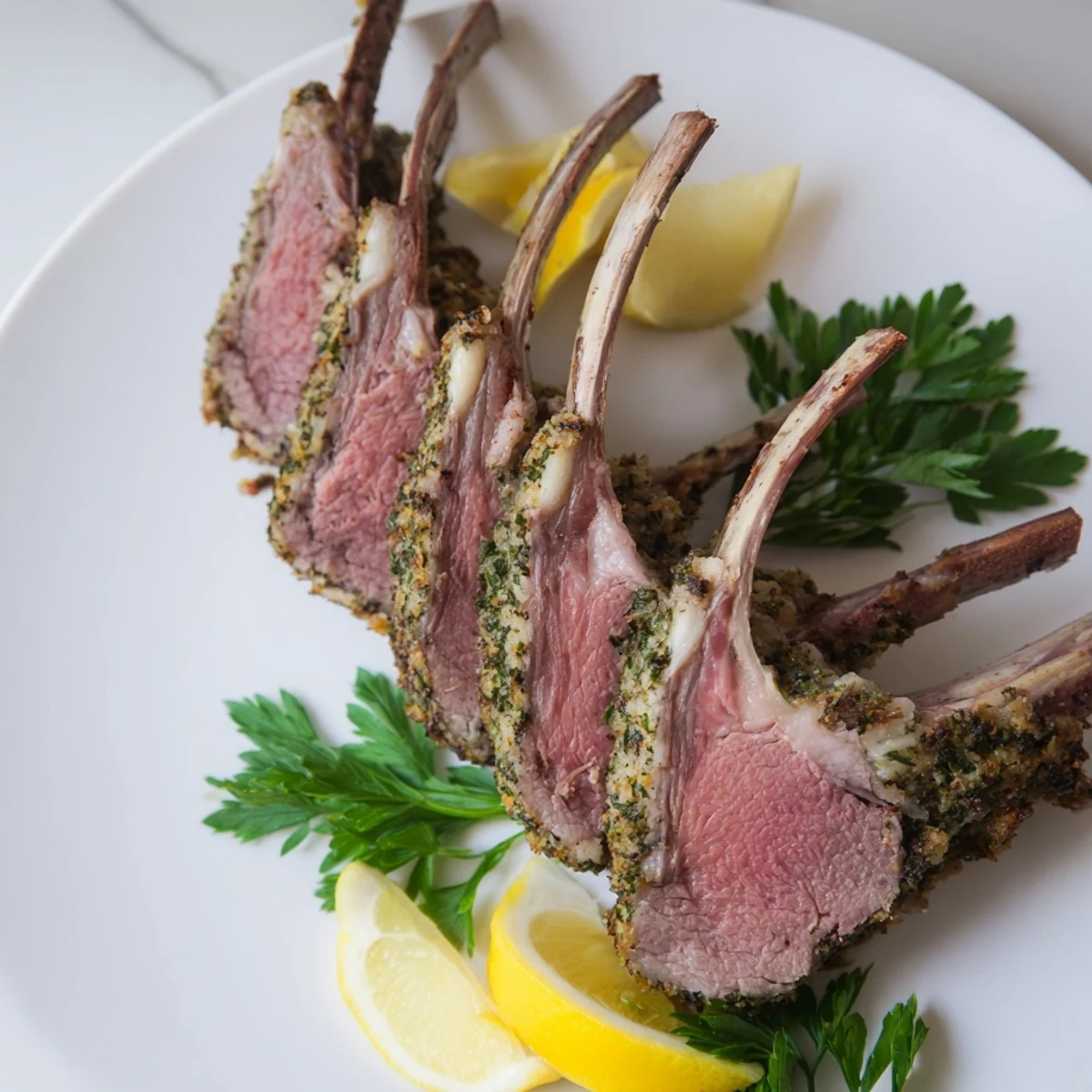
 This dish features a tender rack of lamb, coated in a fragrant herb crust of rosemary, thyme, garlic, and Dijon mustard. Roasted at high heat to retain juiciness and flavor, it rests before slicing into chops for serving. Perfect for elegant dinners, the lamb pairs wonderfully with roasted vegetables or a rich potato gratin. The blend of fresh herbs enhances the meat’s natural taste, creating a memorable and refined main course.
I still remember the first time I roasted a lamb rack—it was for my partner's birthday dinner, and I was absolutely terrified I'd ruin it. The meat was so beautiful, so expensive, that I kept second-guessing myself until the moment I pulled it from the oven and saw that perfect golden crust glistening under the kitchen light. That's when I realized: a lamb rack isn't intimidating at all. It's actually one of the most forgiving cuts you can cook, and when you treat it with a few fresh herbs and a little respect for timing, it becomes something genuinely special.
I cooked this for a small dinner party last spring, and what surprised me most wasn't the cooking—it was watching everyone's faces when they bit into those chops. There's something about lamb that makes people pause mid-conversation, something luxurious and earthy that demands attention. One guest asked if I'd made the herb crust myself, and when I said yes, she looked shocked. That's the magic of this recipe: it tastes like a secret you've been keeping.
Ingredients
- 1 rack of lamb (8 ribs, about 1.5–2 lbs), frenched: This is the star. Ask your butcher to french it for you—that means cleaning the meat from the ends of the bones so they're exposed and beautiful. The frenching isn't just for looks; it helps the meat cook more evenly and makes plating feel restaurant-quality.
- 2 tablespoons fresh rosemary, finely chopped: This is non-negotiable. Rosemary and lamb are a match made in heaven. The fresher the herb, the more fragrant your crust will be. If you only have dried rosemary, use half the amount—it's much more concentrated.
- 2 tablespoons fresh thyme leaves, finely chopped: Thyme brings a subtle earthiness that rosemary alone can't deliver. Strip the leaves from the stems with your fingers rather than chopping the whole branch; it's faster and you'll avoid woody bits.
- 4 cloves garlic, minced: This is your umami anchor. The garlic will turn sweet and mellow in the oven, but when it's raw in the paste, it gives the crust real backbone.
- 1 teaspoon sea salt and ½ teaspoon freshly ground black pepper: Don't skip the sea salt—it dissolves into the crust better than table salt. Grind your pepper fresh if you can; it makes a real difference.
- 2 tablespoons Dijon mustard: This is the binder that holds everything together and adds a subtle tanginess. It also helps the crust stick to the meat during roasting.
- 2 tablespoons olive oil: Good olive oil, not the cheap stuff. This is what makes the crust golden and crispy instead of just paste.
- 1 tablespoon fresh parsley and lemon wedges (optional): The parsley is your final flourish—a pop of color and fresh flavor right before serving. Lemon cuts through the richness beautifully.
Instructions
- Heat your oven and prepare the stage:
- Preheat your oven to 400°F (200°C). While it's warming up, pat your lamb rack completely dry with paper towels. I mean really dry—any moisture on the surface will steam instead of sear, and you want that beautiful crust. Trim any excess fat if there are large pieces hanging off, but leave the layer of fat that covers the meat itself. That fat is what keeps everything tender inside.
- Make the herb paste that will change everything:
- In a small bowl, combine your chopped rosemary, thyme, and minced garlic. Add the sea salt and pepper. Then stir in the Dijon mustard and olive oil until you have a fragrant, spreadable paste. At this point, stop and smell it. Really smell it. That's what's about to happen to your lamb.
- Coat the lamb like you mean it:
- Place your lamb rack on a cutting board and rub the herb mixture all over it, paying special attention to the meaty side. You want a generous, even coating. Don't be shy. Let some of it fall into the pan—that will make the pan sauce incredible.
- Roast until perfect:
- Place the rack fat side up in your roasting pan or ovenproof skillet and slide it into that hot oven. For medium-rare (which is what I always recommend), you're looking at 20–25 minutes. The internal temperature should hit 130–135°F (54–57°C) when you check with a meat thermometer in the thickest part. If you like it more done, give it another few minutes, but please don't cook lamb past medium. It becomes dry and loses everything that makes it special.
- Let it rest like it's earned it:
- This is the step people skip, and it's always a mistake. Remove the lamb from the oven and transfer it to a cutting board. Loosely tent it with foil and let it sit for 10 minutes. During this time, the juices redistribute throughout the meat, and everything stays moist when you slice it. I know 10 minutes feels long when you're hungry, but trust me.
- Slice and serve with pride:
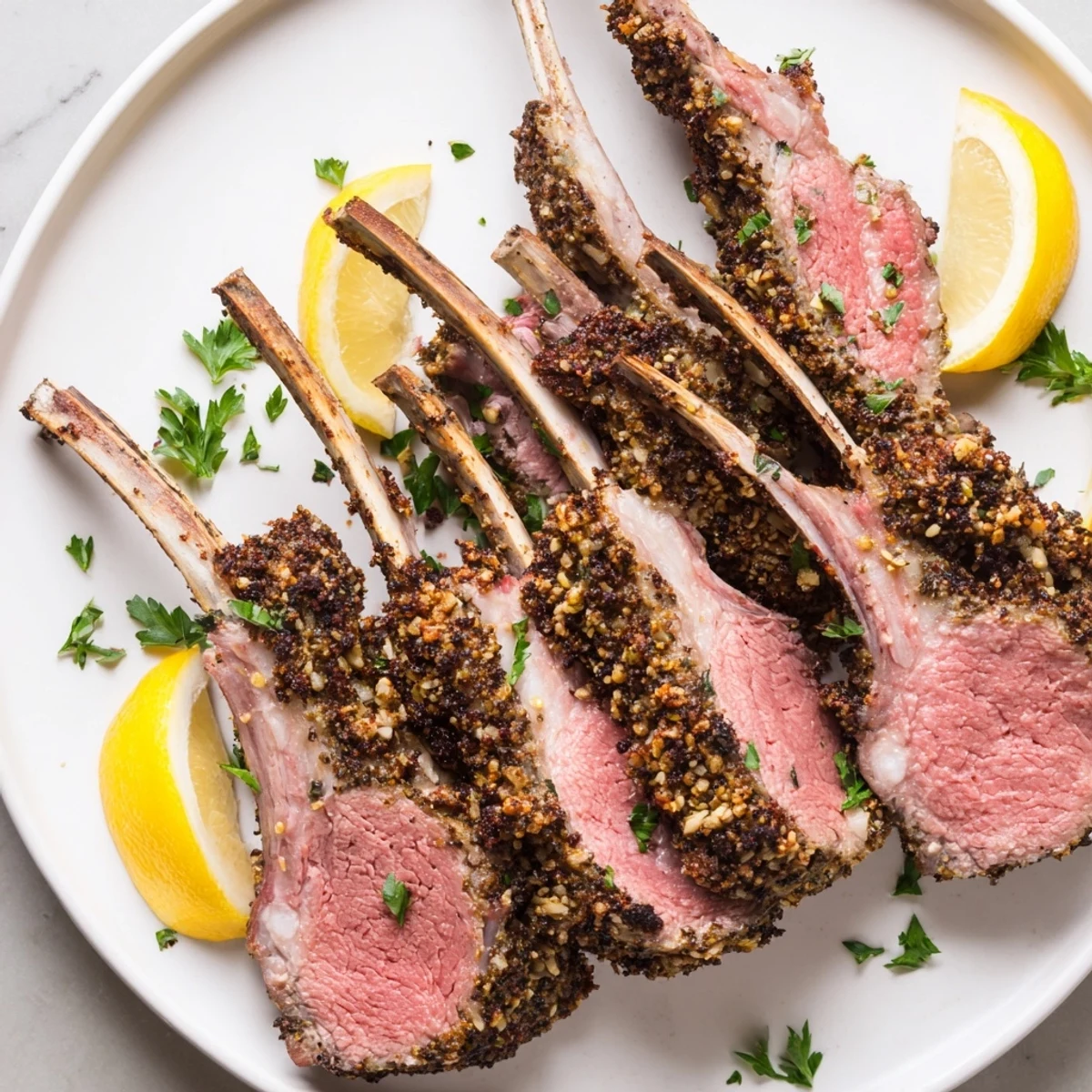
- Slice between the bones to separate the individual chops. You should have 8 beautiful, herb-crusted lamb chops. If you have fresh parsley, sprinkle it over the top right before plating. A squeeze of lemon over everything brightens it all up. Serve immediately.
 Save to Pinterest
 There was a moment during that birthday dinner when everyone went quiet except for the sound of knives on plates and quiet sighs of contentment. That's when I knew this recipe was something I'd be making forever. It wasn't complicated, it wasn't stressful, but it made everyone feel celebrated. Now I make it whenever someone deserves to feel special, and it never fails.
Understanding the Cut
A lamb rack is one of the most elegant cuts you can work with, and once you understand it, you'll want to cook it constantly. Each rack has 8 ribs, and when they're frenched (which just means the meat is cleaned from the ends of the bones), they look like a crown. This isn't just for show—the frenching actually helps the meat cook more evenly because those exposed bones conduct heat directly into the meat around them. When you buy lamb, you're investing in quality, so choose a butcher who will talk you through what you're getting. Ask them to trim any excess surface fat but keep the layer underneath; that's your insurance policy for tenderness.
The Magic of the Herb Crust
The herb crust is where this recipe earns its reputation. Rosemary and thyme are the classics for a reason—they have a natural affinity with lamb that feels almost inevitable once you taste it together. The Dijon mustard is the secret weapon here. It sounds odd, but it does two things: it acts as an emulsifier that keeps the herbs, garlic, and oil bound together, and it adds a subtle background note that makes people ask what that special ingredient is. The olive oil is what creates that golden, crispy exterior in the oven. You need good oil here; it's not the place to use something cheap or oxidized. If you have a grassy, peppery olive oil you love, use it. Your crust will taste like it.
Timing and Temperature
Cooking lamb is less about following a timer religiously and more about understanding how heat and meat work together. At 400°F (200°C), you're using high enough heat to create that beautiful crust while the inside stays tender. The 20–25 minute window for medium-rare is a guide, not gospel. Every oven is different, and the actual temperature of your lamb when it goes in matters. If it comes straight from the fridge, it might take closer to 25 minutes. If it's been sitting out for 20 minutes to come to room temperature, it might be done in 20. This is why a meat thermometer is your best friend. That 130–135°F (54–57°C) internal temperature is the only number that really matters. Below that and it's too rare in the middle; above that and you're risking dryness. Medium to medium-rare is the sweet spot where lamb tastes its absolute best.
- Always use a meat thermometer inserted into the thickest part of the meat, not touching bone
- If your oven runs hot (and many home ovens do), start checking at 18 minutes instead of waiting the full 25
- The resting period isn't optional—it's what transforms good lamb into extraordinary lamb
 Save to Pinterest
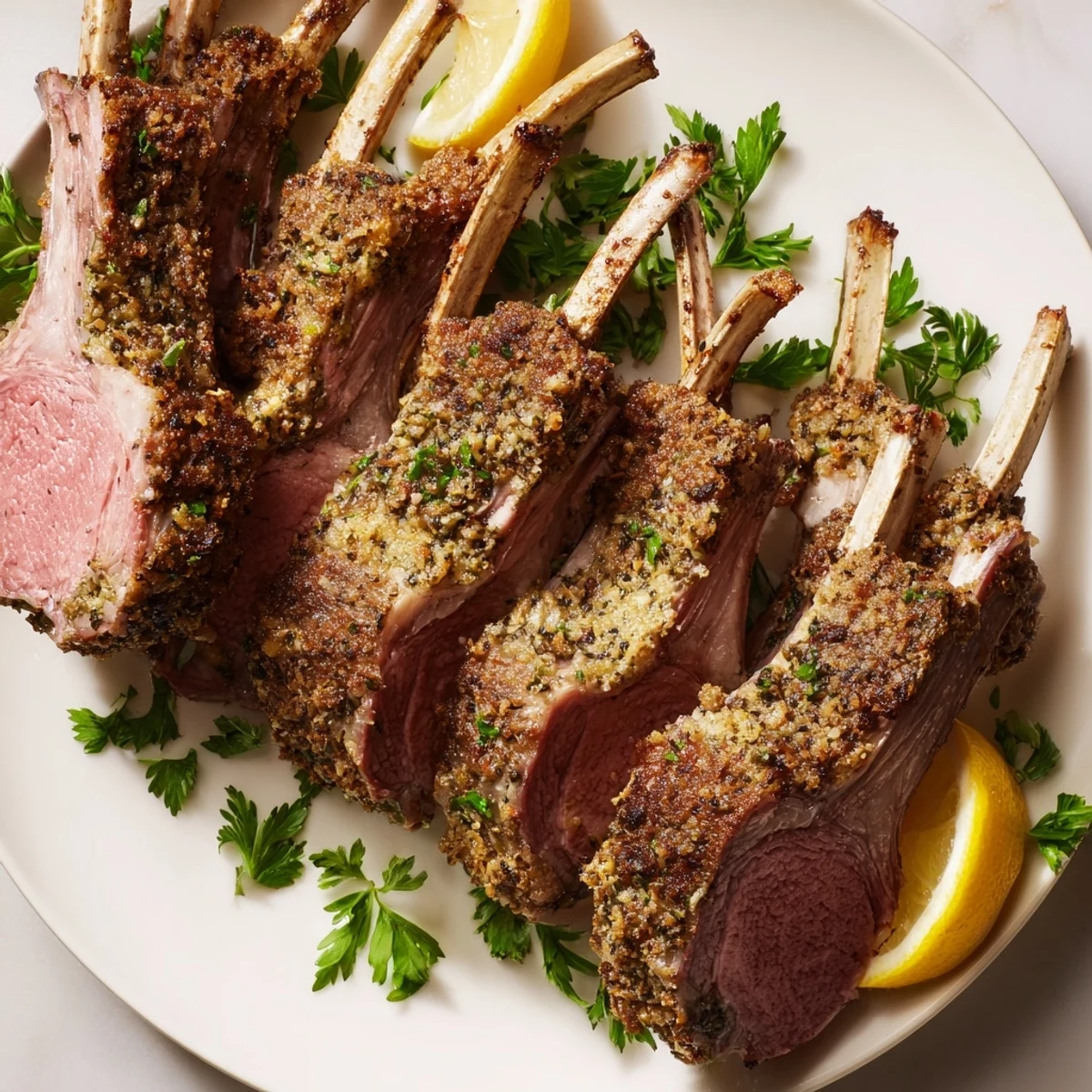
 This is the recipe I return to when I want to cook something that feels special without the stress. It's proof that elegant food doesn't have to be complicated.
Recipe FAQs
- → What herbs are used for the crust?
-
Fresh rosemary and thyme are finely chopped and combined with garlic, Dijon mustard, olive oil, salt, and pepper to form the flavorful herb crust.
- → How is the lamb cooked to medium-rare?
-
The rack is roasted at 400°F (200°C) for 20-25 minutes until the internal temperature reaches 130–135°F (54–57°C).
- → Can the mustard be substituted?
-
Yes, whole-grain mustard can be used instead of Dijon for added texture and a slightly different flavor profile.
- → What sides pair well with this lamb?
-
Roasted vegetables or a creamy potato gratin complement the flavors and complete the meal.
- → Should the lamb rest after roasting?
-
Resting for 10 minutes tented with foil helps redistribute juices, resulting in a moister and more tender meat.