
 Save to Pinterest
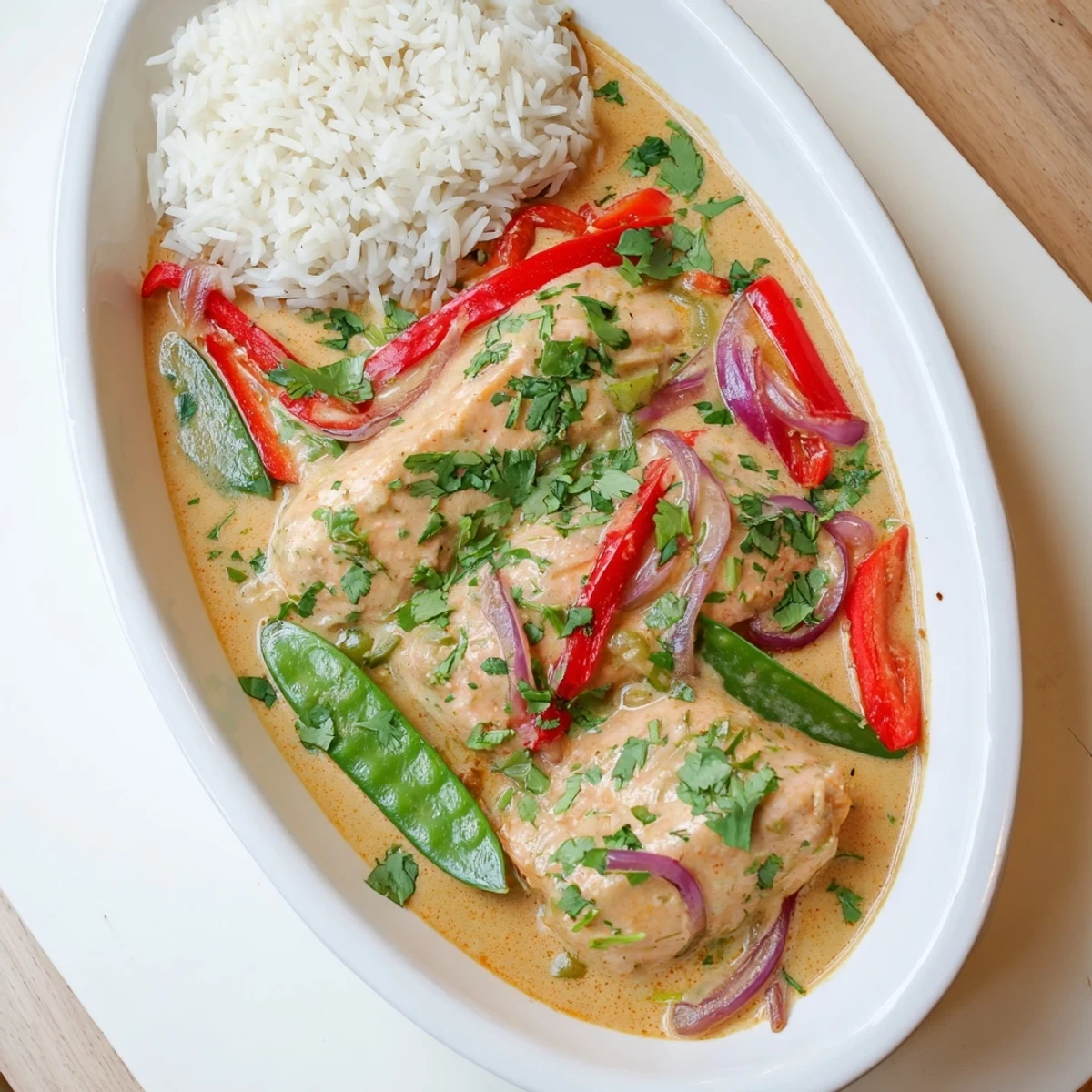
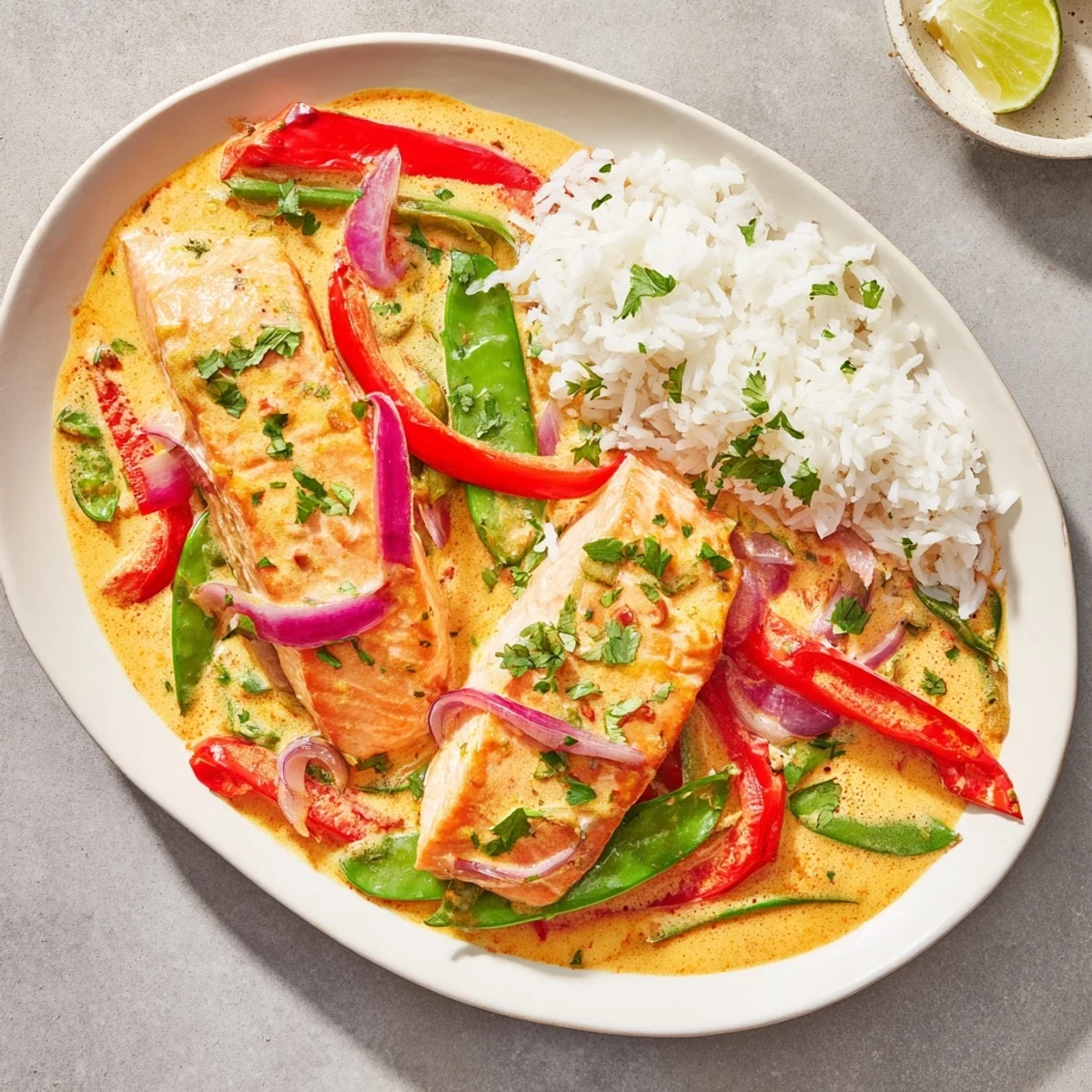
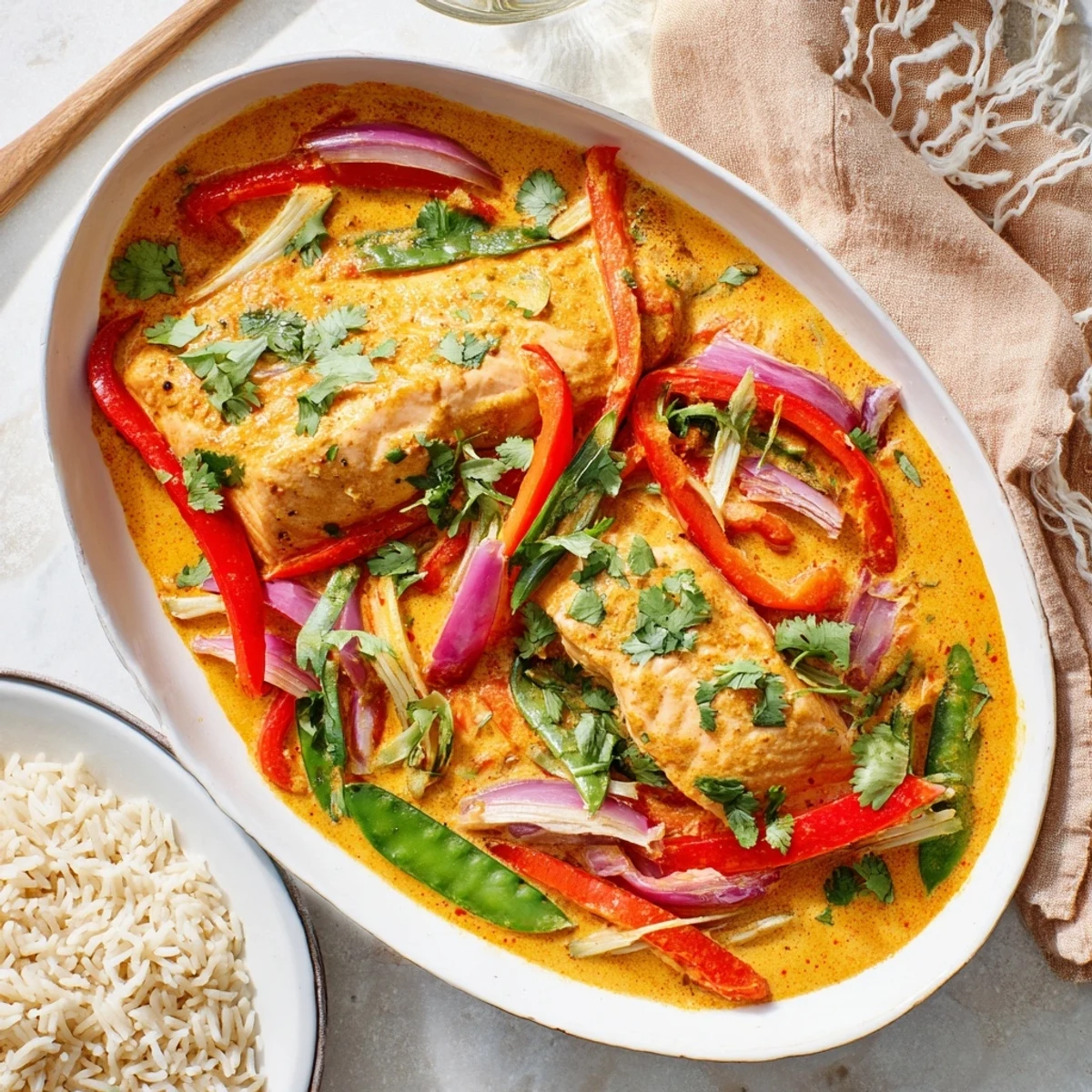
 This vibrant Thai-inspired dish combines tender salmon fillets with a creamy red curry coconut sauce. The aromatic blend features fresh coriander, crisp bell peppers, and sugar snap peas, creating a balanced harmony of sweet, spicy, and savory notes. Ready in just 35 minutes, the salmon gently poaches in the fragrant broth, absorbing the rich flavors while remaining moist and flaky. Perfect served over jasmine rice for a complete satisfying meal that brings restaurant-quality Thai cuisine to your home kitchen.
The first time I made this curry, my kitchen filled with this incredible aroma that had my roommate poking her head in, asking what restaurant I'd ordered from. When I told her it was salmon simmering in coconut curry, she actually sat down at the counter and refused to leave until it was ready. That's the kind of reaction this dish pulls out of people, something about how the rich sauce clings to the flaky fish while still letting the salmon taste like itself.
Last winter, when my sister was recovering from surgery and needed meals she could actually get excited about, this became our weekly tradition. She'd text me from her couch saying 'can we do that salmon thing tonight?' and I'd already have the coconut milk out. There's something about the combination of heat from the curry and cool fresh herbs that makes you feel taken care of, like a blanket in food form.
Ingredients
- 4 salmon fillets: Skinless works best here so the sauce can really penetrate the fish, and about 150g each is the sweet spot for cooking through without drying out
- 1 tablespoon vegetable oil: Just enough to bloom that curry paste and wake up all the spices
- 2 tablespoons Thai red curry paste: Don't be shy with this, it's the backbone of the whole dish and brings that gorgeous depth
- 400 ml coconut milk: Full fat is absolutely worth it here, the richness is what makes the sauce so velvety
- 1 tablespoon fish sauce: The secret ingredient that adds umami without making it taste fishy
- 1 tablespoon brown sugar: Just enough to balance the heat and bring everything together
- Juice of 1 lime: Fresh is non negotiable, that bright acidity cuts through the rich coconut
- 1 red bell pepper, thinly sliced: Adds sweetness and a gorgeous pop of color
- 100 g sugar snap peas: They stay crunchy even after simmering, which I love for texture
- 1 small red onion, thinly sliced: Gets sweet and soft in the sauce while still holding its shape
- 1 small bunch fresh coriander: The more the better, that fresh herbal finish is everything
- 1 fresh red chili, sliced: Optional if you're heat sensitive, but I love that extra kick
Instructions
- Wake up the curry paste:
- Heat that oil in your big skillet over medium, then spoon in the red curry paste. Let it cook for about a minute, stirring constantly, until you can really smell those aromatics blooming. This step is crucial, it transforms the paste from something sharp into something deep and mellow.
- Build your sauce base:
- Pour in the coconut milk, fish sauce, brown sugar, and lime juice. Give it a good stir and bring everything to a gentle simmer, letting the flavors get friendly with each other. The kitchen should start smelling pretty incredible about now.
- Add the vegetables:
- Throw in those sliced bell peppers, sugar snap peas, and red onion. Let them simmer for 3-4 minutes, just until they're starting to soften but still have some crunch. You want them tender, not mushy, they'll keep cooking a bit with the salmon.
- Nestle in the salmon:
- Gently place those salmon fillets right into the sauce, spooning some over the top. Cover the pan and let it simmer for 10-12 minutes, until the salmon is opaque and flakes when you test it with a fork. The gentle poaching keeps it incredibly moist.
- Season and finish:
- Taste the sauce and adjust with more lime or fish sauce if it needs it. Then shower everything with that fresh coriander and sliced chili if you're using it. The herbs hit the warm sauce and release this amazing aroma that makes it impossible to wait to eat.
 Save to Pinterest
 This recipe became my go to for dinner parties after I served it to my in laws for the first time and my father in law literally asked if he could lick the bowl. Now whenever I make it, I double the sauce because everyone wants extra rice to soak it all up. It's one of those dishes that makes people feel special without requiring you to be in the kitchen all day.
Making It Your Own
Sometimes I swap in green beans or broccoli for the snap peas, whatever looks good at the market. Once I used baby bok choy when that was all I had, and it soaked up the sauce beautifully. The vegetables are flexible here, just keep in mind how long they take to cook and add accordingly.
Getting That Sauce Just Right
The balance of salty, sweet, and spicy is personal, so I always taste before serving. Sometimes the curry paste is hotter than expected, sometimes the coconut milk is sweeter. That final adjustment with lime or fish sauce makes all the difference between good and great.
Serving Suggestions
Jasmine rice is classic and honestly perfect, but I've also served this over coconut rice for extra richness. A simple cucumber salad with lime and chili cuts through the richness nicely if you want something fresh on the side.
- Marinate the salmon in lime and salt for 10 minutes if you have time, it really makes a difference
- Warm your bowls before serving, the sauce stays hot longer that way
- Put extra coriander on the table, some of us want it piled high
 Save to Pinterest
 I hope this becomes one of those recipes you turn to when you want something that feels special but doesn't require a special occasion. There's pure joy in a dish that comes together this easily and tastes this good.
Recipe FAQs
- → Can I use curry powder instead of red curry paste?
-
Red curry paste provides authentic Thai flavor with ingredients like lemongrass, galangal, and kaffir lime. Curry powder offers a different flavor profile and won't deliver the same vibrant taste. For best results, use Thai red curry paste found in Asian markets or well-stocked grocery stores.
- → What vegetables work well in this dish?
-
Bell peppers, sugar snap peas, and red onion provide crunch and color. You can also add green beans, broccoli, baby corn, bamboo shoots, or Thai eggplant. Add vegetables that cook quickly to maintain their texture in the simmering sauce.
- → How do I know when the salmon is done?
-
The salmon is ready when it flakes easily with a fork and reaches an internal temperature of 63°C (145°F). The flesh should turn opaque and slightly pink. Avoid overcooking as the salmon will continue cooking slightly in the hot sauce after removing from heat.
- → Can I make this dairy-free?
-
This dish is naturally dairy-free as it uses coconut milk instead of cream. Always check your red curry paste label to ensure no dairy ingredients are added. The result is a rich, creamy sauce without any dairy products.
- → How can I adjust the spice level?
-
Start with 1 tablespoon of red curry paste for moderate heat. Add more paste in 1-teaspoon increments for increased spiciness. For less heat, reduce the paste or choose a mild brand. Fresh chili garnish adds extra kick for those who enjoy spicy dishes.
- → Can I make this vegetarian?
-
Substitute firm tofu cubes for salmon and replace fish sauce with soy sauce or vegetarian fish sauce. Press and lightly fry the tofu first to maintain texture. Add tofu during the last 5 minutes of cooking to prevent crumbling.