
 Save to Pinterest
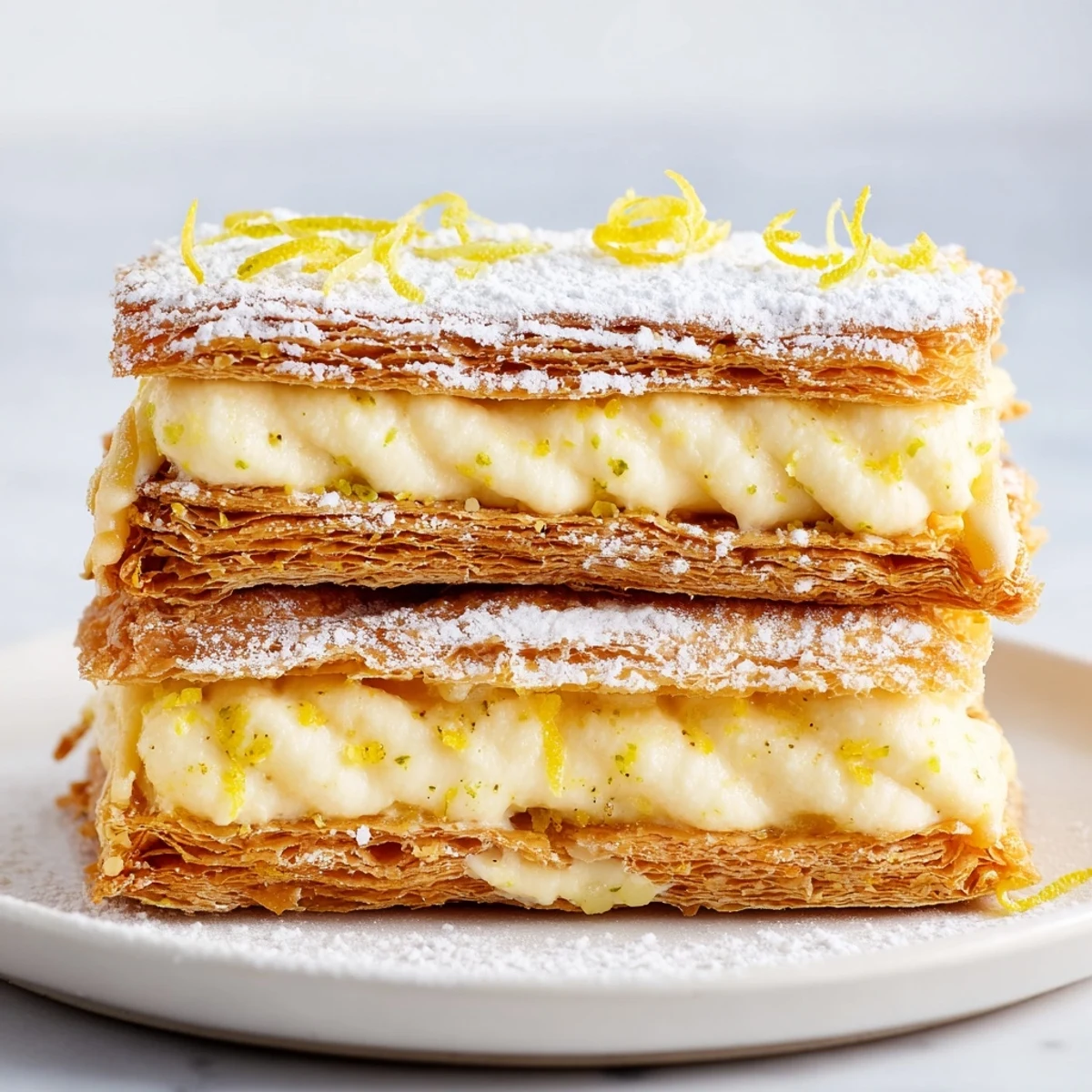
 This lemon ricotta mille feuuille brings together shatteringly crisp all-butter puff pastry and a cloud-like lemon ricotta filling. The ricotta is sweetened with powdered sugar and brightened with fresh lemon zest and juice, then lightened further with folded whipped cream.
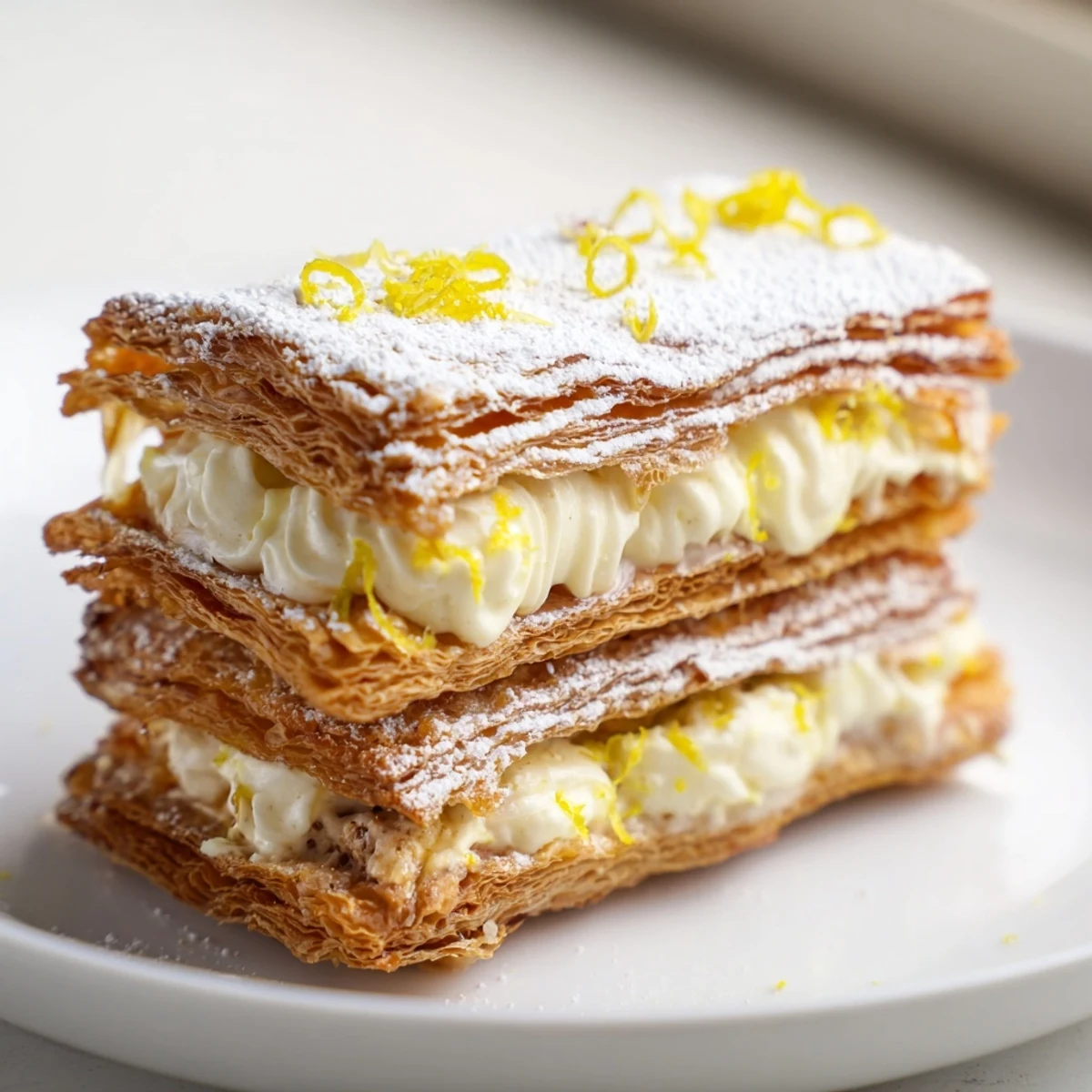
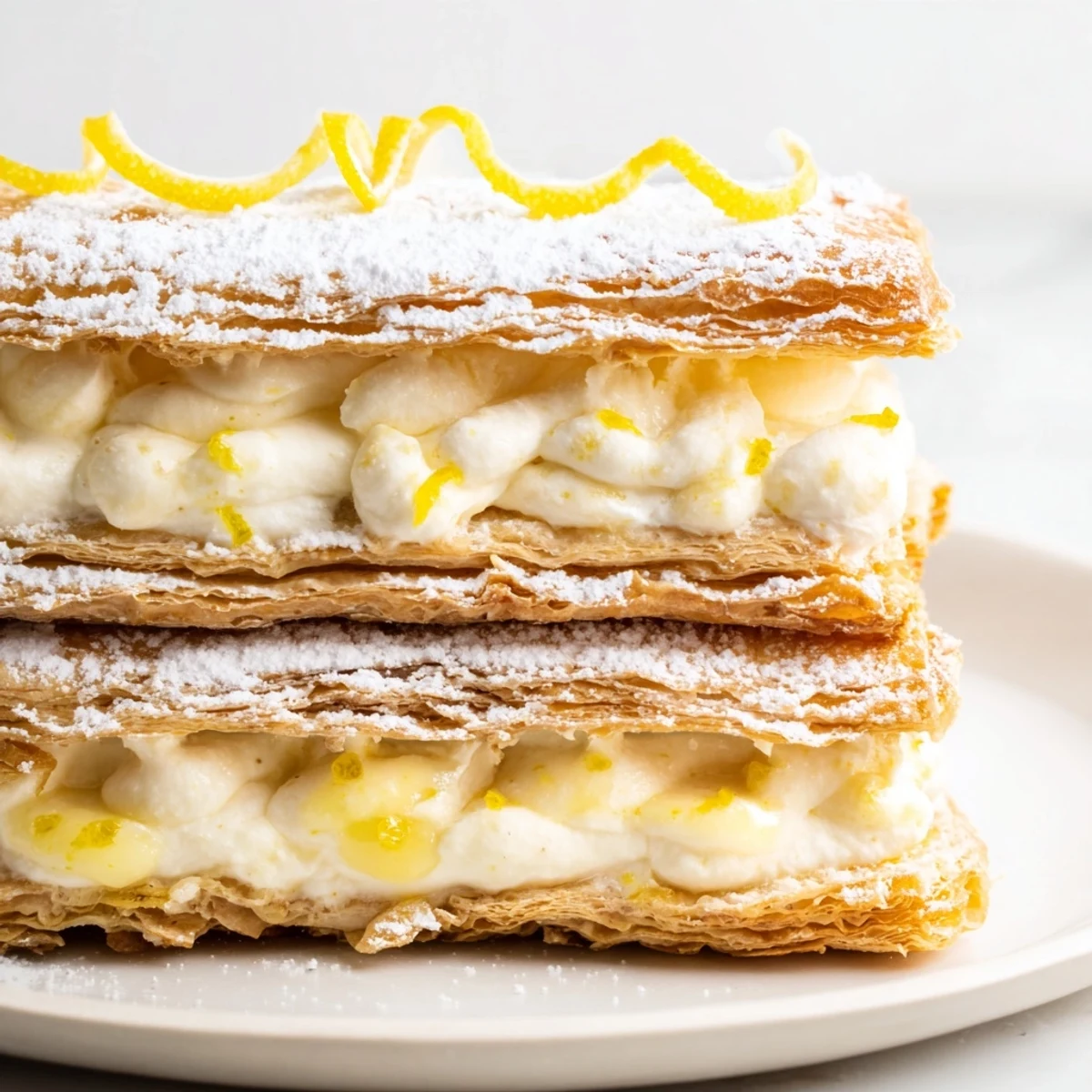
Each pastry sheet is baked flat under weight for even browning, then trimmed and cut into neat rectangles. Three layers of pastry alternate with two generous layers of the citrusy filling, creating the classic striped profile when sliced.
Finished with a snowy dusting of powdered sugar and optional lemon zest curls, this dessert is best assembled shortly before serving to preserve the contrast between the flaky pastry and the silky cream.
The bakery down the street used to sell mille feuilles draped in caramelized sugar, and every Saturday morning I would stand at the glass counter debating whether to spend my last few euros on one. I never attempted making them at home until a rainy Tuesday when I had leftover ricotta and a box of frozen puff pastry staring back at me from the freezer. That first attempt was messy, lopsided, and completely irresistible. The lemon ricotta filling was so bright and creamy that I burned my tongue tasting it straight from the bowl before the pastry was even cool.
I served these at a dinner party last spring and my friend David actually set down his phone to eat, which if you know him is the highest compliment possible. He asked if I had ordered them from somewhere and I pretended to be offended, but honestly the store bought puff pastry does most of the heavy lifting. We ended up standing around the kitchen island with the remaining pieces, licking powdered sugar off our fingers and debating whether to open another bottle of wine. It was one of those nights where dessert accidentally becomes the whole evening.
Ingredients
- All butter puff pastry (2 sheets, about 250 g each, thawed if frozen): The all butter version is nonnegotiable here because the flavor and flakiness are dramatically better than the standard kind. Let it thaw in the fridge overnight rather than on the counter so it stays easy to handle.
- Ricotta cheese (400 g): Drain it in a fine mesh sieve for at least thirty minutes because excess moisture will make your filling slide right off the pastry layers.
- Powdered sugar (60 g plus 2 tbsp for dusting): The measured amount sweetens the filling without overpowering the lemon, while the extra is for that final snowy finish.
- Zest of 2 lemons: Rub the zest into the sugar with your fingers before mixing to release the oils and make the flavor bloom throughout the filling.
- Juice of 1 lemon: Fresh only, and strain out the seeds and pulp so your filling stays silky smooth.
- Pure vanilla extract (1 tsp): A small amount rounds out the sharpness of the lemon and adds warmth to the ricotta.
- Heavy cream (120 ml): Whipped and folded in, it lightens the ricotta into something almost cloudlike.
- Lemon zest curls (optional): These add a fragrant finishing touch that signals to everyone what they are about to taste.
Instructions
- Get the oven ready:
- Preheat to 200C (400F) and line two baking sheets with parchment paper. You want the oven fully hot before the pastry goes in so it puffs dramatically and evenly.
- Prepare the pastry sheets:
- Lay each puff pastry sheet flat on the prepared sheets and prick them all over with a fork like you are dotting a landscape. Place another sheet of parchment on top and weigh it down with a second baking sheet to keep the layers from puffing too wildly.
- Bake until golden:
- Bake for 15 to 18 minutes until the pastry is deeply golden and sounds hollow when you tap it gently. Remove the top baking sheet and parchment, then let everything cool completely while you work on the filling.
- Make the lemon ricotta filling:
- Combine the drained ricotta, powdered sugar, lemon zest, lemon juice, and vanilla in a bowl, whisking until completely smooth and fragrant. Taste it and add a tiny squeeze more lemon if the ricotta tastes too mild.
- Whip and fold the cream:
- In a separate cold bowl, whip the heavy cream until it holds soft peaks that gently droop when you lift the whisk. Fold it into the lemon ricotta mixture in three additions, being gentle so you do not deflate what you just whipped.
- Cut the pastry layers:
- Once the pastry sheets are completely cool, trim the ragged edges with a sharp knife and cut each sheet into three equal rectangles, giving you six total pieces. A serrated knife works best for clean edges without crushing the delicate layers.
- Assemble the mille feuilles:
- Place one pastry rectangle on your serving plate and spread a generous third of the filling evenly across it using an offset spatula. Repeat with another pastry layer and more filling, then crown it with the final pastry sheet on top.
- Finish and chill:
- Dust the top generously with powdered sugar through a fine sieve and scatter lemon zest curls over the surface if you are using them. Chill the whole assembly for at least thirty minutes so the layers settle and slicing becomes cleaner.
 Save to Pinterest
 There is something about cutting into a mille feuille and hearing that first crack of pastry that makes the whole kitchen go quiet. Everyone waits for that sound before reaching for a plate.
A Few Twists Worth Trying
Sweetened berries or thin strawberry slices tucked between the layers add a burst of tartness that plays beautifully with the creamy filling. You can also swap the ricotta for mascarpone if you want something richer and more indulgent, though I would dial back the powdered sugar slightly to balance the extra fat. A glass of Prosecco or Moscato dAsti alongside turns a simple dessert into a proper occasion with almost no extra effort.
Tools That Actually Help
A sharp serrated knife and an offset spatula are the two tools that will save you from mangling your beautiful pastry layers. The offset spatula lets you spread the filling evenly without pressing down and cracking the delicate pastry underneath. Electric mixers are helpful for the cream but a good whisk and a chilled bowl work just as well if you do not mind a little arm workout. Keep parchment paper handy at every stage because nothing sticks to a baking sheet faster than melting butter pastry.
What to Watch Out For
The most common pitfall is underbaking the pastry, which leaves it pale and doughy instead of shatteringly crisp. Check your oven temperature with an oven thermometer if things seem off, because even a small discrepancy can ruin puff pastry. Store bought puff pastry varies between brands, so read the ingredient list and choose one where butter is the primary fat for the best flavor and rise.
- If you are short on time, you can bake the pastry sheets a day ahead and store them in an airtight container at room temperature.
- Leftover assembled mille feuille will keep in the fridge for about a day but the texture will soften considerably.
- Always double check the puff pastry packaging for allergen information since some brands include eggs or unexpected additives.
 Save to Pinterest
 Every time I make these I am reminded that the most impressive desserts are often the simplest ones done with care. A few humble ingredients, a little patience, and you have something that makes people feel genuinely spoiled.
Recipe FAQs
- → Can I make the puff pastry sheets ahead of time?
-
Yes, you can bake the puff pastry sheets up to one day in advance. Store them in an airtight container at room temperature to maintain their crispness. Avoid refrigerating baked puff pastry, as moisture will soften it.
- → What can I substitute for ricotta cheese?
-
Mascarpone makes a richer, creamier alternative to ricotta. You can also use a blend of cream cheese and sour cream for a tangier profile. If using mascarpone, you may want to reduce the heavy cream slightly since mascarpone is already quite soft.
- → How do I keep the puff pastry layers crisp?
-
The key is assembling the mille feuuille as close to serving time as possible. The ricotta filling will gradually soften the pastry. You can also brush the inside of the pastry layers with a thin coat of melted white chocolate as a moisture barrier before adding the filling.
- → Can I freeze a mille feuuille?
-
Freezing is not recommended once assembled, as the filling will separate and the pastry will become soggy upon thawing. However, you can freeze the baked, unfilled pastry sheets for up to one month. Thaw them at room temperature and re-crisp in a 180°C oven for five minutes before assembling.
- → Why do I need to weigh down the puff pastry while baking?
-
Puff pastry rises dramatically in the oven due to its layered butter structure. Baking it under a second baking sheet prevents excessive puffing and ensures flat, even layers that are easy to stack and slice. Pricking the dough with a fork also helps control the rise.
- → What pairs well with lemon ricotta mille feuuille?
-
A glass of Prosecco or Moscato d'Asti complements the lemon flavors beautifully. Fresh berries, particularly raspberries or sliced strawberries, can be layered between the pastry for added fruitiness. A drizzle of lemon curd on the plate also works wonderfully.