
 Save to Pinterest
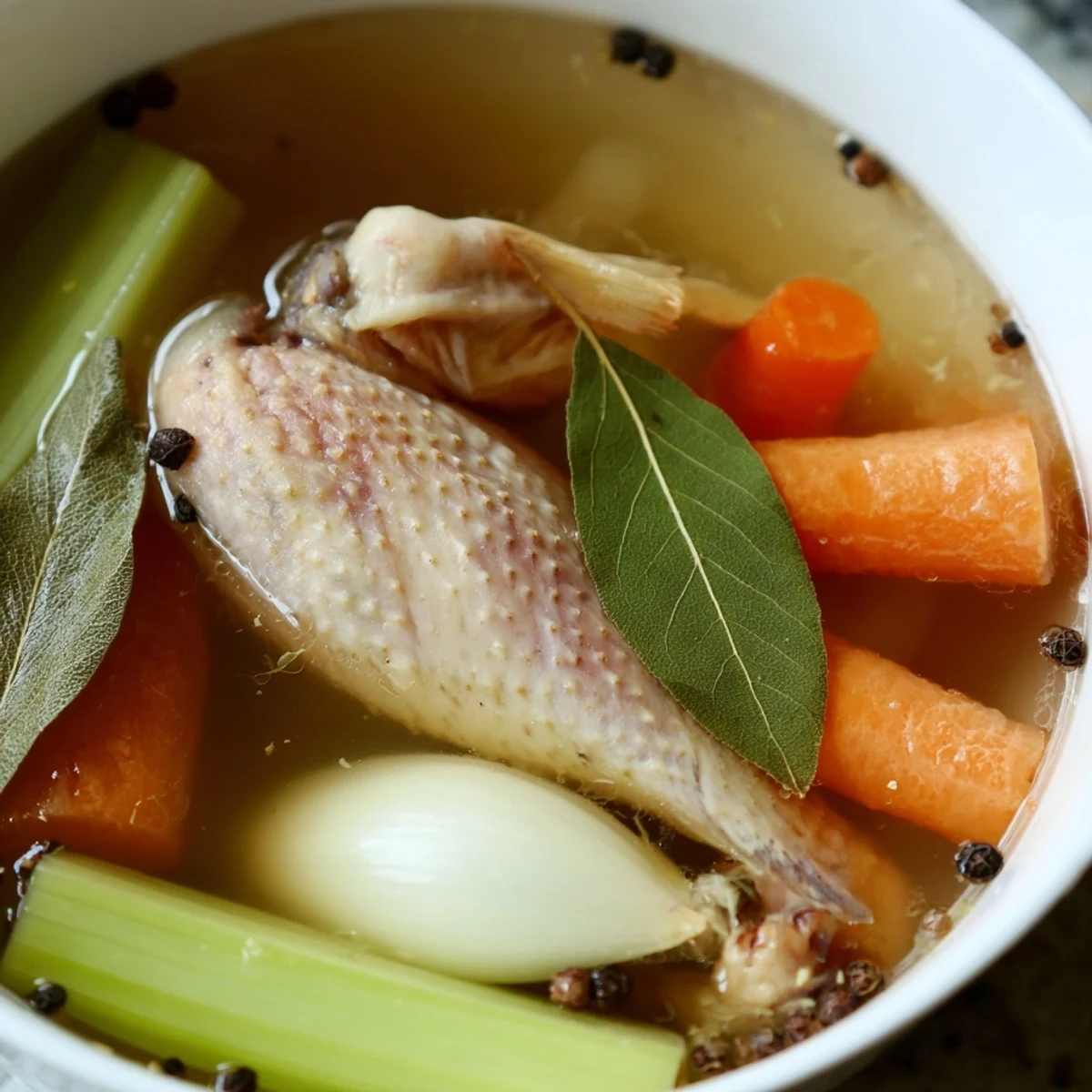
 This nourishing broth combines chicken bones, fresh ginger, and a medley of aromatics gently simmered for hours to extract deep flavors. Ideal as a warming drink or a rich base for soups, stews, and sauces, it enriches dishes with natural collagen and savory taste. The slow simmering process infuses every cup with wholesome goodness, while optional herbs add subtle brightness. Roasting bones beforehand enhances depth, and careful skimming ensures clarity. Enjoy chilled or warmed, this broth supports both flavor and comfort in cooking.
There's something quietly magical about filling a pot with chicken bones and letting them transform into liquid gold over hours. My first bone broth happened on a gray Sunday when my fridge held mostly bones leftover from roasting, and I wondered what would happen if I just... simmered them. Four hours later, the kitchen smelled like comfort itself, and I understood why cultures have treasured this simple broth for centuries.
I made this broth one winter afternoon while my partner graded papers at the kitchen table. Every few minutes they'd pause and breathe in deeply, asking what I was doing that smelled so good. By the time it finished, they were convinced it had healing powers, and honestly, after sipping a warm mug with just a pinch of salt, I wasn't disagreeing.
Ingredients
- Chicken bones (1.5 kg): Don't wait for the perfect bones—use what you have: carcasses from roasted chickens, wing tips, necks, or a mix. The more surface area, the richer your broth.
- Onion (1 large, quartered): Leave the papery skin on; it gives the broth a golden color and contains beneficial compounds you want to extract.
- Carrots (2 medium, roughly chopped): No need to peel them or cut them into perfect pieces; rough chunks are fine and actually release more flavor.
- Celery (2 stalks, roughly chopped): This is your umami backbone—don't skip it or substitute it.
- Garlic (1 whole head, halved crosswise): You'll be surprised how mild and sweet it becomes after hours of gentle simmering.
- Ginger (75 g, sliced): This is what makes the broth feel alive; slice it with the skin on to preserve the spicy warmth and nutrients just beneath the surface.
- Bay leaves (2): These quiet little leaves add an earthy depth that balances the brightness of the ginger.
- Black peppercorns (1 tsp whole): Whole seeds are gentler than ground pepper and release flavor gradually over hours.
- Sea salt (2 tsp, or to taste): Start here and adjust at the end; your broth will concentrate as it simmers.
- Cold water (3 liters): Cold water helps extract gelatin and nutrients from the bones more effectively than hot water.
- Apple cider vinegar (1 tbsp, optional but worth it): It lowers the pH slightly and helps minerals leach from the bones into your broth.
- Fresh herbs like thyme or parsley (optional): Add these in the final 30 minutes for a cleaner, fresher note.
Instructions
- Gather and prep:
- Place your chicken bones in a large pot and arrange your vegetables and aromatics nearby. The prep takes maybe 15 minutes, and it's oddly meditative—just rough chopping, no precision needed.
- Build your broth foundation:
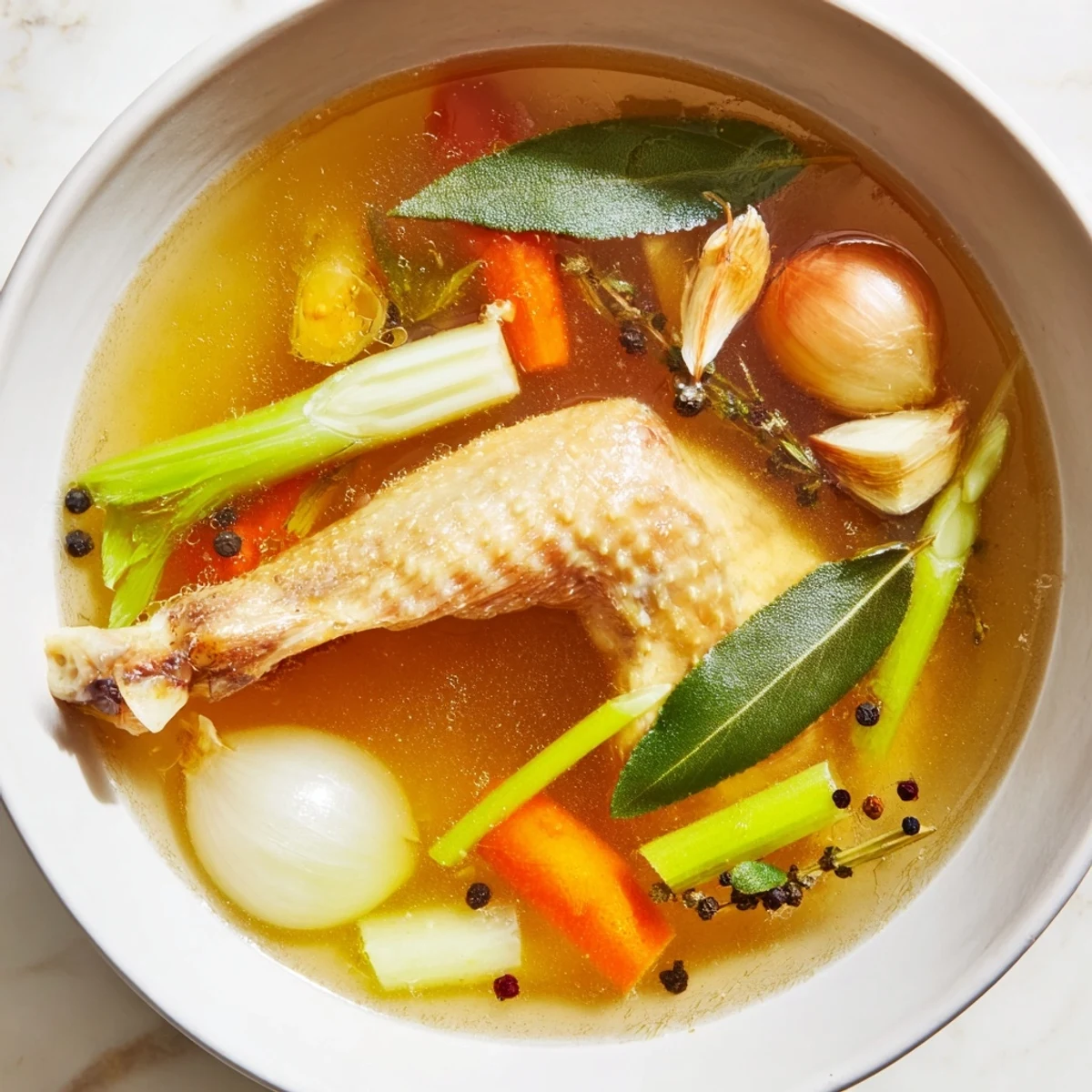
- Add the onion, carrots, celery, garlic, and ginger directly to the pot with the bones. Pour in the cold water until everything is submerged, then add the bay leaves, peppercorns, salt, and apple cider vinegar if you're using it.
- Bring to a boil, then back off:
- Turn the heat to medium-high and let it come to a full boil. You'll notice a grayish foam rising to the surface—that's impurities, and you want to skim it off with a ladle or spoon during the first 30 minutes. It sounds fussy, but this one step makes your broth clear and refined instead of cloudy.
- Settle into a gentle simmer:
- Reduce the heat to low so the broth barely trembles; you want tiny bubbles, not rolling waves. This is the whole secret: time and gentleness extract everything you want from those bones without breaking them down into bitter fragments.
- Let time do the work:
- Leave the pot uncovered and simmer for 4 hours, checking every hour or so to skim any remaining foam and make sure the bones stay covered with liquid. Add a splash of water if needed. Your kitchen will fill with an aroma that makes you feel like you're actually nourishing your body.
- Finish strong:
- In the final 30 minutes, add fresh thyme or parsley if you want that herb brightness. Then pour the entire pot through a fine-mesh sieve or cheesecloth into a large bowl, letting it drip naturally—don't press or squeeze the solids or you'll end up with a cloudy broth.
- Taste, cool, and store:
- Once strained, taste your broth and add more salt if it needs it. Let it cool to room temperature, then refrigerate. After a few hours, any fat will solidify on top—you can remove it if you prefer a lighter broth, or leave it for extra richness and flavor.
 Save to Pinterest
 One morning, I poured a mug of this broth and realized I was sipping something that took zero special ingredients and less than 20 minutes of actual work, yet tasted like a secret from a fancy restaurant. It reminded me that the most nourishing things in cooking often come from simplicity and patience, not complexity.
Ways to Use This Broth
This broth is endlessly versatile once it's made. Drink it warm in a mug on cold mornings with just a sprinkle of sea salt, use it as the base for soups, cook grains and risotto in it, or freeze it in ice cube trays for whenever you need a quick boost of flavor and nutrition in a sauce or sauté.
Flavor Boosters to Try
If you want to push the broth toward more sophisticated territory, there are a few directions you can take it. A splash of soy sauce or tamari adds umami depth, a piece of kombu seaweed brings mineral complexity, a squeeze of lemon or lime brightens it right before serving, or a star anise pod and a small cinnamon stick will give it a subtle spiced warmth that's incredible in Asian-inspired soups.
Roasting for Deeper Flavor
If you have 30 minutes extra, roasting changes everything. Spread your bones and vegetables on a baking sheet, roast at 220°C (425°F) for 30 minutes until they're browned and caramelized, then transfer everything to your pot. This gives you a darker, richer broth with savory depth that tastes like it took twice as long to make.
- Roasting isn't necessary, but once you try it, you'll see why restaurant chefs do it.
- The caramelized bits stuck to the baking sheet are pure flavor; deglaze it with a splash of water and add that to your pot.
- If you're short on time, the broth without roasting is still completely delicious and nourishing.
 Save to Pinterest
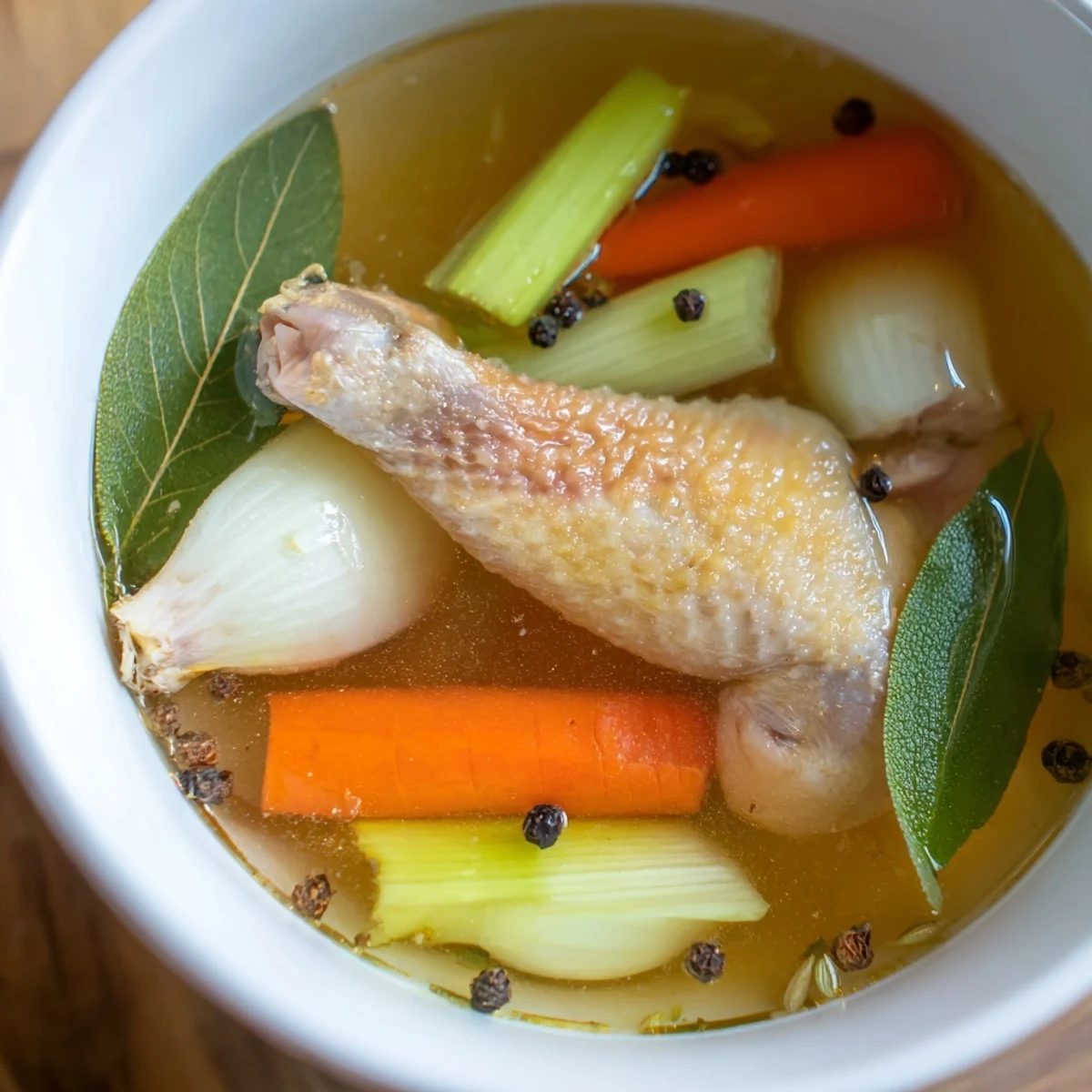
 The best part about learning to make bone broth is realizing that the most nutritious, flavorful things in cooking don't require fancy ingredients or complicated techniques. This broth is proof that sometimes the simplest, most patient approach creates something you'll return to again and again.
Recipe FAQs
- → What is the best way to extract flavor from chicken bones?
-
Simmering chicken bones slowly for several hours helps release gelatin and minerals, creating a rich, flavorful broth.
- → Why include fresh ginger in the broth?
-
Fresh ginger adds a subtle warmth and aromatic depth, balancing the savory richness of the chicken bones.
- → Can I roast the bones before simmering?
-
Roasting bones and vegetables enhances the broth's color and develops deeper, roasted flavors.
- → How to keep the broth clear during cooking?
-
Regularly skim off foam and impurities during the first 30 minutes of simmering to maintain clarity.
- → What are good uses for this broth?
-
Use the broth as a nourishing drink, a base for soups, sauces, or cooking grains like risotto.
- → Can I store the broth for later use?
-
Freeze portions of the cooled broth for up to three months to preserve freshness and flavor.