
 Save to Pinterest
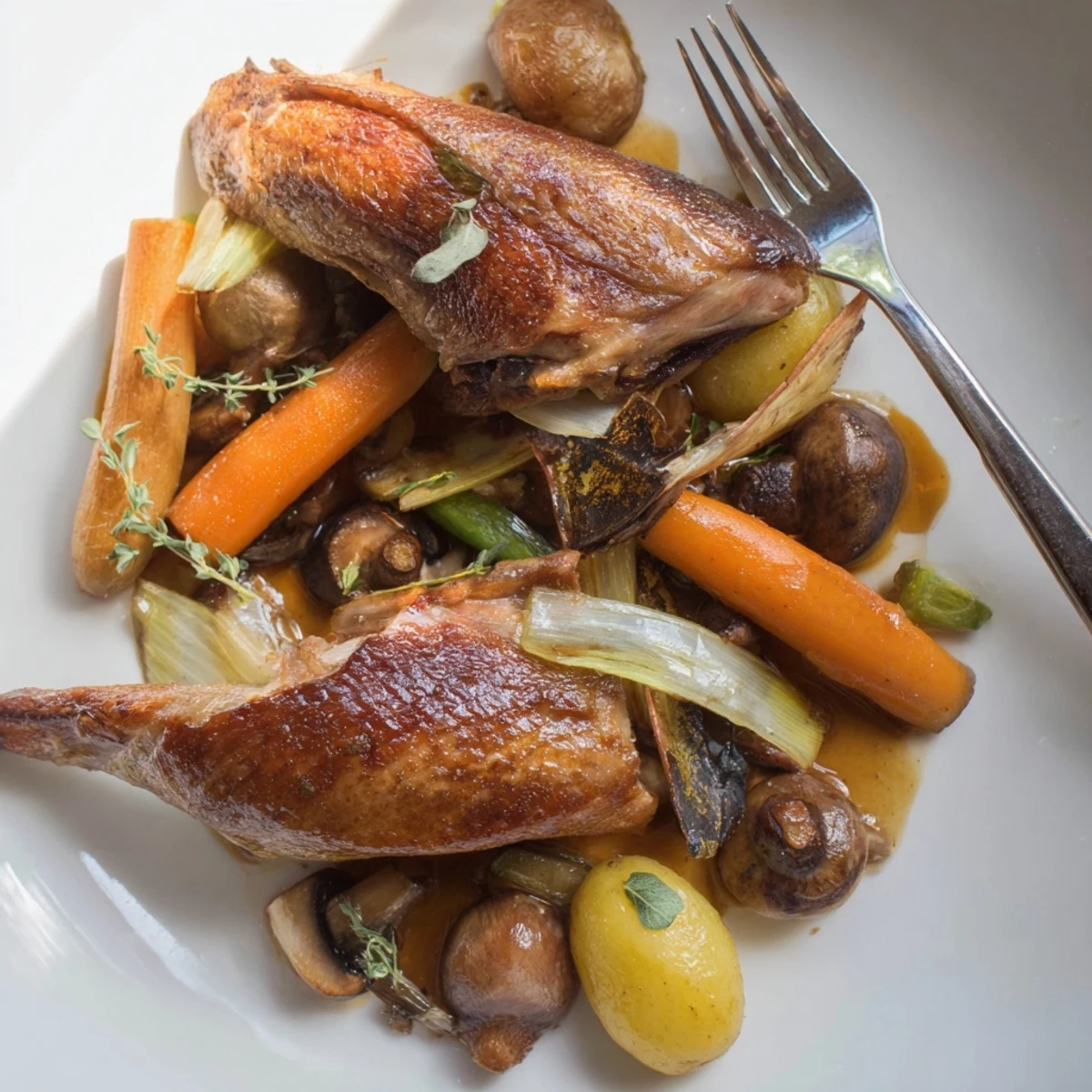
 Slow-braise duck pieces in white wine, stock, soy and honey with bay and thyme until the meat is meltingly tender. Root vegetables and mushrooms cook in the same pot, absorbing the braising juices for deep flavor. Finish under high heat with a brush of neutral oil to crisp the skin to golden crackle. Rest briefly, discard herbs, and spoon juices over the vegetables before serving.
My tiny Paris apartment kitchen became the testing ground for this recipe after I'd spent a small fortune on restaurant duck one too many times. The rich, glossy sauce that pooled around my plate kept haunting me, so I decided to reverse-engineer the experience at home. After three attempts and one very smoke-filled kitchen, I finally cracked the code on getting impossibly crispy skin while keeping the meat tender enough to cut with a spoon.
The first time I served this, my friend Sarah sat in stunned silence for a full minute after taking her first bite. I'd spent the afternoon nervously checking the oven, convinced I'd either undercook or dry out the duck, but that moment at the table made every minute worth it. Now it's become our go-to celebration meal, the kind of dinner that makes even a random Tuesday feel like a special occasion.
Ingredients
- 1 whole duck (about 2 kg), cut into 4 pieces: Ask your butcher to do this, or use kitchen shears to split along the backbone and through the breastbone
- 1 tsp kosher salt: Diamond Crystal works best for even coverage without over-salting
- ½ tsp black pepper: Freshly ground makes a noticeable difference in the final crust
- 250 ml dry white wine: Sauvignon Blanc or Pinot Grigio add brightness without overpowering
- 500 ml chicken stock: Homemade gives the best flavor, but a good quality store-bought works fine too
- 2 tbsp soy sauce: Adds that essential umami depth and gorgeous mahogany color
- 2 tbsp honey: Balances the saltiness and helps the skin caramelize beautifully
- 2 bay leaves: Don't skip these, they add a subtle earthy backbone to the sauce
- 5 sprigs fresh thyme: Tie them together with kitchen string for easy removal later
- 4 cloves garlic, smashed: Smashing releases more flavor than mincing for long braises
- 1 large shallot, sliced: Shallots are sweeter and more delicate than onions in this context
- 3 large carrots, peeled and cut into thick chunks: Cut them into 2-inch pieces so they don't disintegrate during braising
- 2 parsnips, peeled and cut into thick chunks: Their natural sweetness pairs perfectly with rich duck
- 1 large leek, white and light green parts only, sliced: Rinse thoroughly, leeks are notorious for hiding grit between layers
- 200 g baby potatoes, halved: These creamy little potatoes absorb flavor like nothing else
- 200 g button mushrooms, halved: They release moisture that helps create the sauce's body
- 1 tbsp neutral oil: Grapeseed or canola has a high smoke point for the final crisping step
Instructions
- Preheat your oven to 170°C (340°F):
- This moderate temperature will gently break down the connective tissue without drying out the meat
- Season the duck pieces thoroughly:
- Pat the pieces completely dry with paper towels, then season generously with salt and pepper on all sides
- Sear the duck until golden:
- In a large Dutch oven over medium heat, place duck skin-side down and cook 5-7 minutes until deeply browned and fat renders, then flip and brown the other side 2-3 minutes
- Sauté the aromatics:
- Pour off all but 2 tablespoons of duck fat, then add shallots, garlic, and leeks, cooking until fragrant and softened
- Add the root vegetables:
- Stir in carrots, parsnips, potatoes, and mushrooms, cooking for 2-3 minutes to coat them in the flavorful fat
- Build the braising liquid:
- Deglaze with white wine, scraping up any browned bits, then add stock, soy sauce, honey, bay leaves, and thyme
- Nestle in the duck:
- Return duck pieces to the pot skin-side up, bring to a gentle simmer, then cover tightly
- Braise until meltingly tender:
- Transfer to the oven and cook for 1 hour 30 minutes until the meat easily pulls away from the bone
- Crisp the skin to perfection:
- Remove the lid, increase heat to 220°C (425°F), brush skin with neutral oil, and roast uncovered for 15-20 minutes until crackling crisp
- Rest and serve:
- Let everything rest for 5 minutes so the juices redistribute, then discard bay leaves and thyme stems before serving
 Save to Pinterest
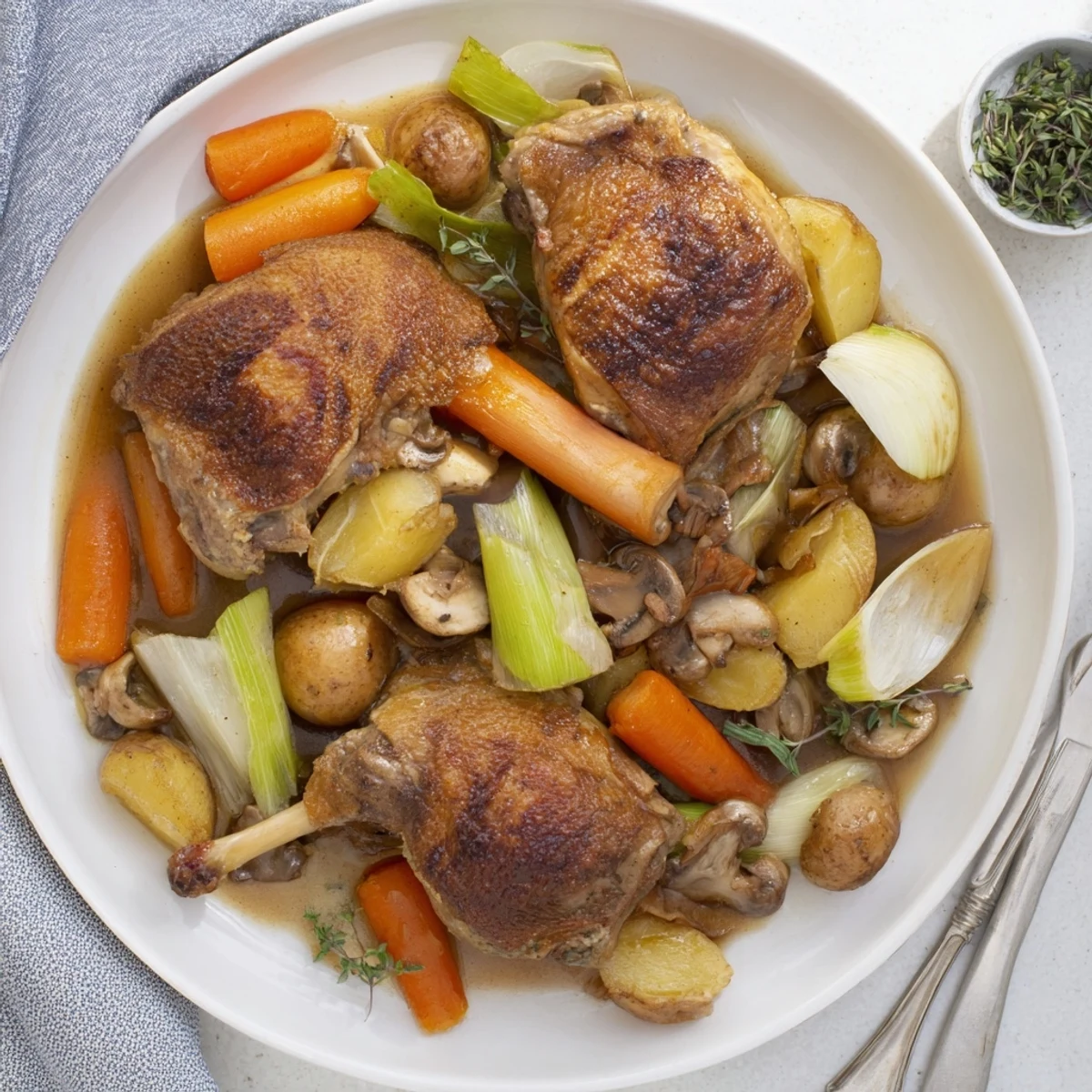
 What started as an attempt to recreate a fancy restaurant meal has evolved into something I actually prefer to the original. The way the vegetables soak up all those rendered duck juices while becoming impossibly tender, that sauce that manages to be both rich and bright somehow, the ritual of bringing everything to the table steaming and aromatic. This is the dish that taught me some of the best cooking happens slowly, patiently, with a little faith in the process.
Making It Your Own
I've discovered this recipe adapts beautifully to whatever root vegetables catch your eye at the market. Turnips add a lovely sharpness, celery root brings an earthy sophistication, and sweet potatoes contribute a color contrast that makes the dish pop on the plate. The braising liquid is also flexible, sometimes swapping in hard cider instead of white wine when I want deeper autumn vibes.
The Sauce Secret
After decades of making pan sauces, I finally learned to trust the reduction process without constantly meddling. That final brush of oil before the high-heat crisping step doesn't just affect the skin, it mingles with the rendered fat and braising liquid to create the most incredible glossy finish. Sometimes I'll whisk in a knob of butter right at the end for that restaurant-style sheen.
Perfect Pairings & Timing
A medium-bodied Pinot Noir or Grenache cuts through the richness beautifully, while a crisp green salad with acidic dressing provides necessary contrast. This dish actually benefits from being made a day ahead, as long as you reheat gently and redo the final crisping step to restore that irresistible crunch.
- Set out all ingredients before starting, the mise en place makes the process feel manageable
- Use the rendered duck fat you pour off for roasting potatoes another day
- The braising liquid freezes beautifully for a quick duck noodle soup later
 Save to Pinterest
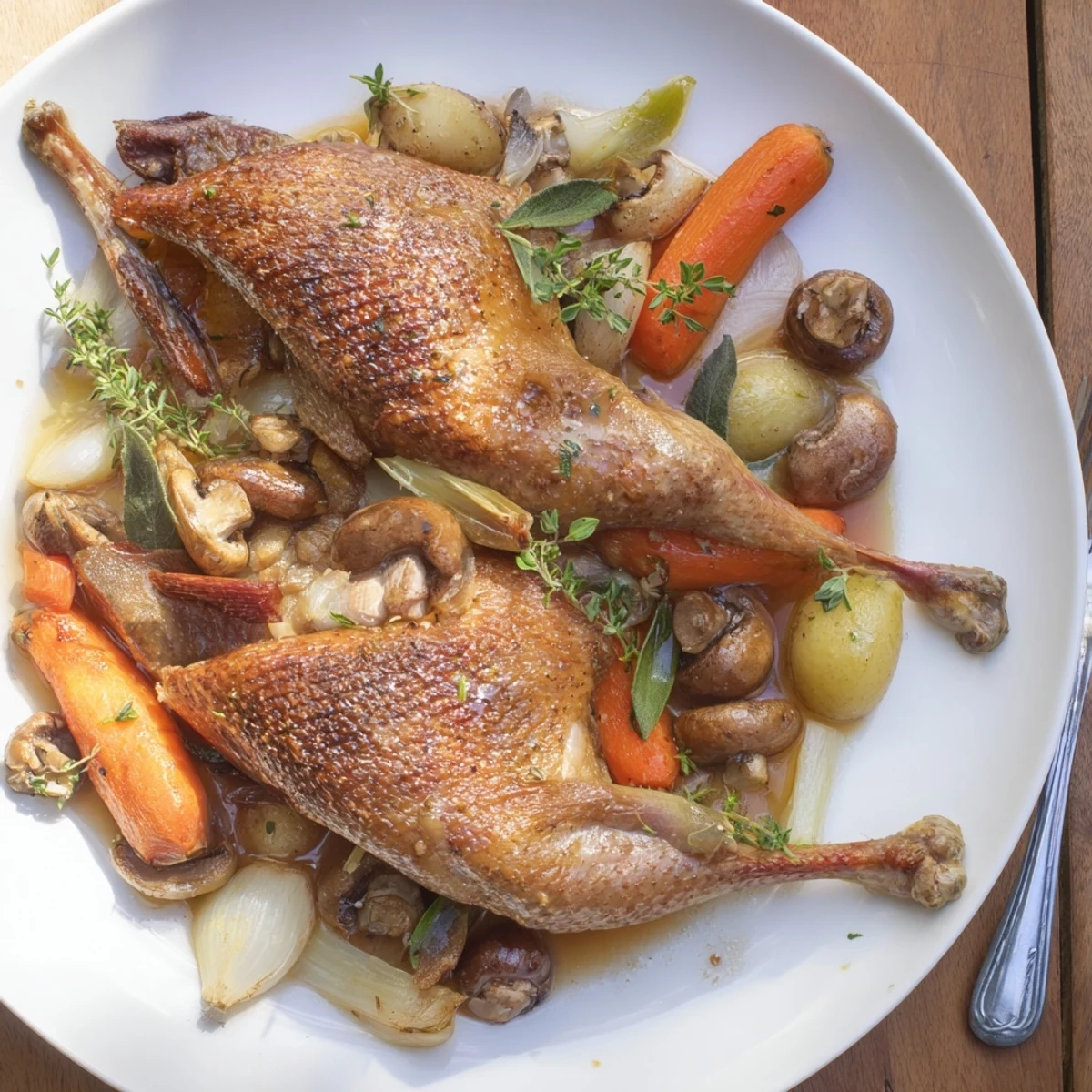
 There's something deeply satisfying about transforming a whole duck into this elegant, company-worthy meal. Every time I lift that Dutch oven lid and see those tender vegetables swimming in that glossy sauce, I'm reminded why we cook at all.
Recipe FAQs
- → What cut of duck works best?
-
Use a whole duck cut into pieces or bone-in legs and breasts; pieces with skin and some fat render best and keep the meat moist during the long braise.
- → How do I get the skin extra crispy?
-
After braising, increase oven temperature and brush skin with neutral oil. Roast uncovered at high heat until the skin renders and browns; pat dry before crisping to reduce excess moisture.
- → Can I swap the vegetables?
-
Yes. Substitute seasonal root vegetables like turnips, celery root or sweet potatoes. Keep chunk sizes large so they hold texture through the braise.
- → How do I ensure the duck becomes tender?
-
Maintain a gentle simmer and low oven temperature while covered for the majority of the cook time; braise until the meat yields easily to a fork before crisping.
- → Is it possible to make this ahead?
-
Yes. Braise the duck and vegetables, cool, then refrigerate. Rewarm gently, then finish under high heat to re-crisp the skin just before serving.
- → What wine pairs well with the dish?
-
A medium-bodied red such as Pinot Noir complements the rich duck and braising flavors; a fuller red also works if you prefer bolder tannins.