
 Save to Pinterest
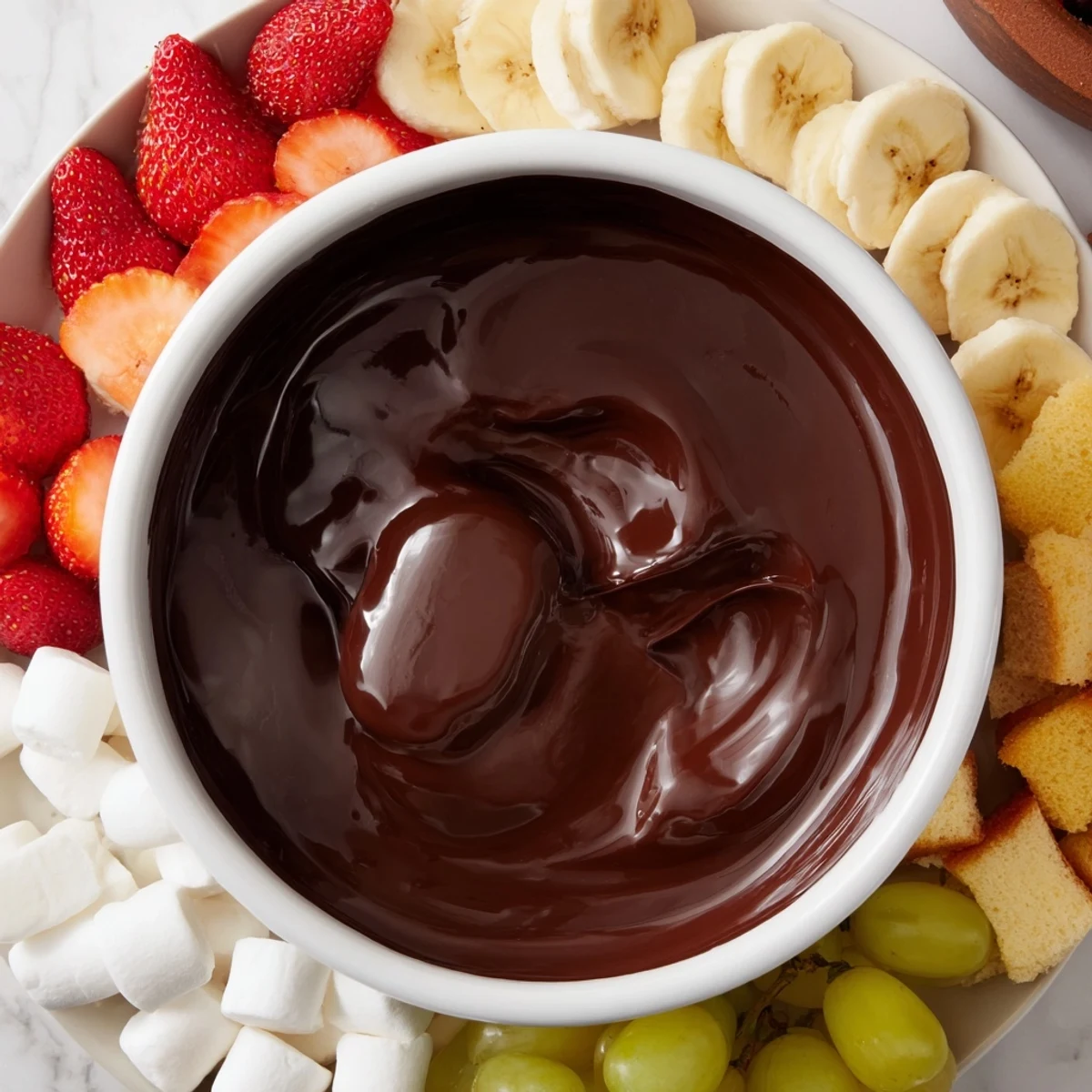
 This luscious dish features creamy melted dark and milk chocolate blended with cream and butter to create a smooth dip. It's served warm alongside fresh fruits, marshmallows, and cake cubes, ideal for dipping and sharing. The addition of vanilla and a pinch of sea salt enhances depth and balance. Perfect for gatherings or romantic occasions, it offers flexibility for customization with optional liqueurs or chocolate variations and pairs wonderfully with sparkling or dessert wines.
There's something about melted chocolate that stops a conversation mid-sentence. I discovered this the first time I set up a fondue pot at a dinner party—not because I'm particularly elegant, but because my friend brought over two bars of quality chocolate and challenged me to make it work. What started as nervous improvisation became the most effortless way to turn an ordinary evening into something people still talk about.
I made this for my partner on a rainy Tuesday, and they looked genuinely confused when I said dessert would take twenty minutes total. The moment that warm chocolate hit their strawberry, I watched their shoulders actually relax. That's when I understood fondue isn't really about the chocolate—it's about giving people permission to linger.
Ingredients
- Dark chocolate (200g, chopped): The backbone of everything; find something you'd actually eat on its own because that's what you're tasting here.
- Milk chocolate (100g, chopped): This softens the intensity and adds richness without making it cloyingly sweet.
- Heavy cream (180ml): The secret that keeps chocolate silky instead of grainy; don't skip it or use a substitute.
- Unsalted butter (2 tbsp): Adds shine and helps the chocolate flow like silk.
- Vanilla extract (1 tsp): One teaspoon rounds out the chocolate flavor in a way people can't quite name.
- Sea salt (pinch): A tiny whisper that makes chocolate taste more like itself.
Instructions
- Warm the cream and butter:
- Pour cream and butter into a medium saucepan and set it over low heat. You're looking for a gentle warmth where tiny bubbles start creeping up the sides—the moment it smells rich and steamy, you're done. Never let it actually boil or you'll break the emulsion.
- Introduce the chocolate:
- Pull the pan off heat and dump in all your chopped chocolate at once. Wait exactly one minute (I know it's hard) while the residual heat softens it. This pause prevents seizing.
- Melt into silk:
- Stir slowly and deliberately, watching the chocolate surrender into the cream. Stop the moment everything looks smooth—about thirty seconds of actual stirring usually does it.
- Season to depth:
- Add vanilla and a tiny pinch of salt, stirring until the smell becomes almost overwhelming in the best way. Taste a tiny bit on your finger; it should taste pure and balanced.
- Transfer to the fondue pot:
- Pour the chocolate into your fondue pot or heatproof bowl sitting over a tea light or low flame. The heat keeps it pourable without cooking it further.
- Arrange and invite:
- Spread your dippers across a platter—fruits, cake, marshmallows, whatever calls to you. Hand people forks and let the dipping begin.
 Save to Pinterest
 The magic moment came when someone I barely knew reached for their third banana slice. There was no performance in it, just genuine pleasure. That's when I realized fondue does something most desserts don't—it gives people an excuse to stay at the table together.
Choosing Your Chocolate
The quality of your chocolate matters more here than in almost any other recipe because chocolate is literally the entire dish. Find a bar that tastes good eaten plain, preferably something where you can read the cocoa percentage on the label. Dark chocolate between 60–70% cocoa creates that perfect balance of bitterness and sweetness without being heavy.
The Art of Dippers
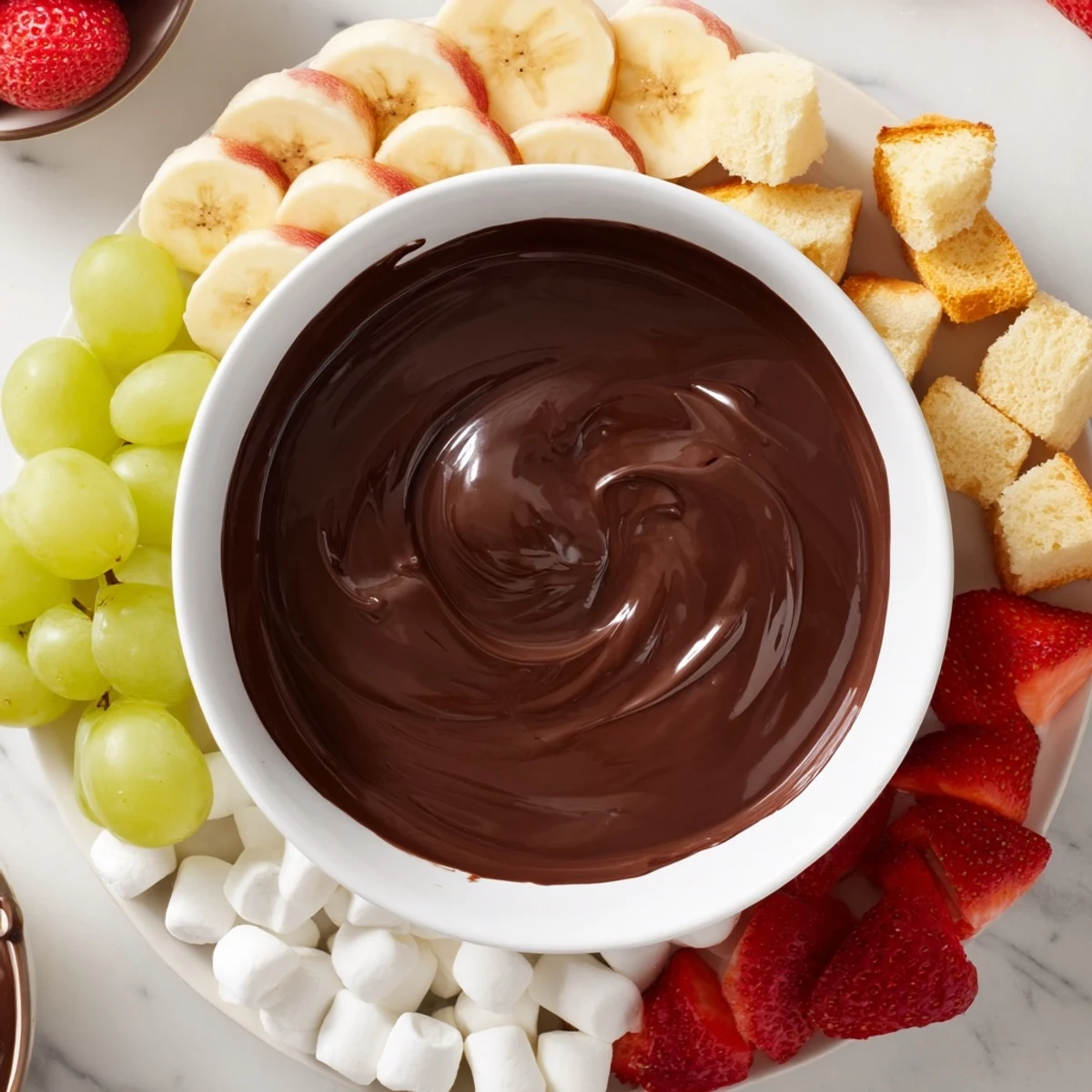
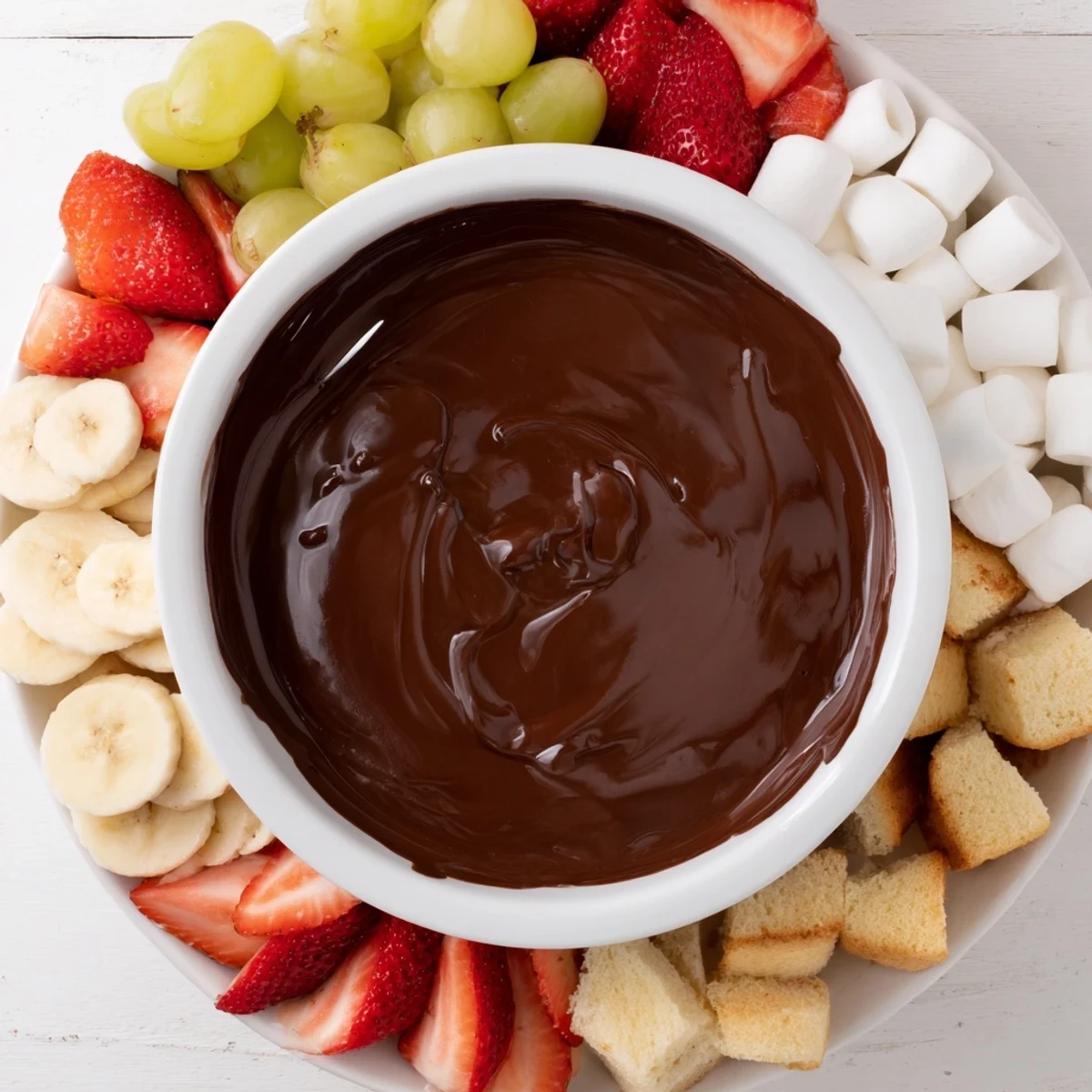
Fruits work best when they're at room temperature or slightly cool—cold dippers cool down the chocolate too fast and don't coat as beautifully. Strawberries are traditional because their tartness cuts through the richness perfectly, but grapes, sliced banana, and orange segments all add different textures and flavors. Pound cake or brioche cubes provide something soft and bread-like that absorbs the chocolate luxuriously.
Making It Your Own
This recipe is genuinely flexible once you understand the core method. Some people add a tablespoon of liqueur like Grand Marnier or Baileys after the chocolate melts for an adults-only version. White chocolate can replace the milk chocolate for something creamier and less intense, or you can go all dark for purists.
- If your chocolate seems too thick as it sits, stir in a tiny splash of cream or even a few drops of neutral oil to keep it pourable.
- Set up the fondue pot in the middle of the table so everyone can reach it without getting up—the whole point is lingering together.
- Have extra dippers waiting in the wings because people always want more once they start.
 Save to Pinterest
 Fondue is one of those recipes that looks fancier than it is, which makes it perfect for nights when you want to feel a little more alive than usual. Make it once and you'll understand why it's never really gone out of style.
Recipe FAQs
- → What types of chocolate are best for this fondue?
-
Using a combination of good-quality dark (60–70% cocoa) and milk chocolate creates a balanced, rich, and creamy texture that melts smoothly.
- → How can I keep the chocolate mixture warm and fluid?
-
Serve the mixture in a heatproof bowl or fondue pot set over a low flame or tea light to maintain warmth without burning.
- → What are some ideal dippers to accompany the chocolate?
-
Fresh fruits like bananas, apples, strawberries, grapes, marshmallows, and cubed pound cake or brioche work wonderfully for dipping.
- → Can I adjust the flavor of the chocolate base?
-
For richer taste, adding a tablespoon of liqueur such as Grand Marnier, Amaretto, or Baileys enhances the flavor profile.
- → Are there any dietary considerations to keep in mind?
-
It contains dairy and may have traces of soy and nuts. Gluten is present if served with cake or cookies. Marshmallows may include gelatin, so check for vegetarian suitability.
- → Can I use white chocolate instead?
-
Yes, white chocolate can be substituted for milk or dark varieties to create a different flavor experience.