
 Save to Pinterest
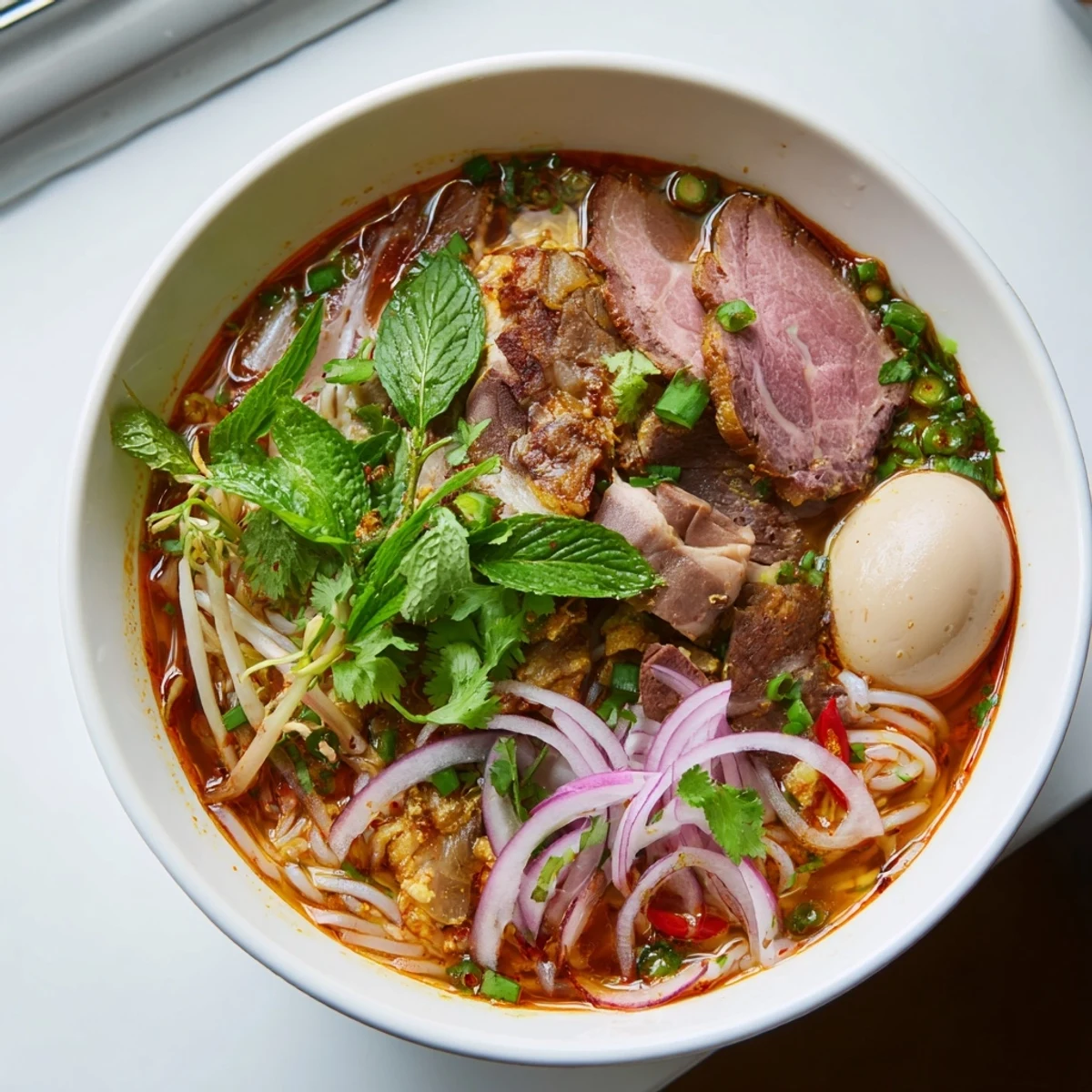
 Bun Bo Hue delivers the signature taste of central Vietnamese cuisine through its complex broth, perfumed with bruised lemongrass, shrimp paste, and aromatic chili oil. The dish features thick round rice noodles, tender beef shank, pork hock, and traditional garnishes like banana blossom and fresh herbs. Perfect for those seeking authentic flavors beyond pho, this Hue specialty balances spicy, savory, and refreshing elements in every bowl.
The steam rising from my first bowl of Bún Bò Huế in a tiny Hue kitchen still haunts me in the best way possible. The grandmother cooking refused to share exact measurements, pointing to her palm and saying 'enough to feel right.' That philosophy of cooking by instinct rather than rigid rules has shaped how I approach Vietnamese soups ever since.
My friend Lan taught me that patience matters more than technique when making Bún Bò Huế. She would sit by her pot for hours, skimming and tasting, insisting the broth needed time to 'become itself.' Now I understand that the slow transformation of simple ingredients into something extraordinary is what makes this soup worth the effort.
Ingredients
- Beef shank: Bone-in cuts add essential body and richness to the broth that boneless meat cannot replicate
- Pork hock: Contributes a velvety mouthfeel and subtle sweetness that balances the bold spices
- Lemongrass: Bruising the stalks releases their citrusy oils which is the signature flavor of Hue cuisine
- Shrimp paste: Use mam ruoc for authentic depth but add it gradually as its intense flavor varies by brand
- Thick rice noodles: Bun bo Hue noodles have a satisfying chew that stands up to the hearty broth
- Annatto seeds: These create the traditional reddish orange color without affecting the flavor
- Chili flakes: Adjust the amount based on your heat preference but do not omit entirely
Instructions
- Clean and prepare the meats:
- Bring the beef shank and pork hock to a boil in plain water for five minutes then drain and rinse thoroughly. This step removes impurities that would cloud your final broth.
- Build the aromatic base:
- Add fresh water and bring to a boil with bruised lemongrass halved onion smashed garlic and sliced ginger. Skim any foam that rises to the surface during the first twenty minutes of cooking.
- Season the broth:
- Stir in fish sauce salt both sugars and shrimp paste then lower heat to maintain a gentle simmer. Let the broth develop its character over two hours until the meat yields easily to a fork.
- Create the red oil:
- Infuse oil with annatto seeds until it turns a vibrant red then discard the seeds. Sauté shallots and garlic until fragrant before stirring in chili flakes and setting this aromatic oil aside.
- Prepare the bowl components:
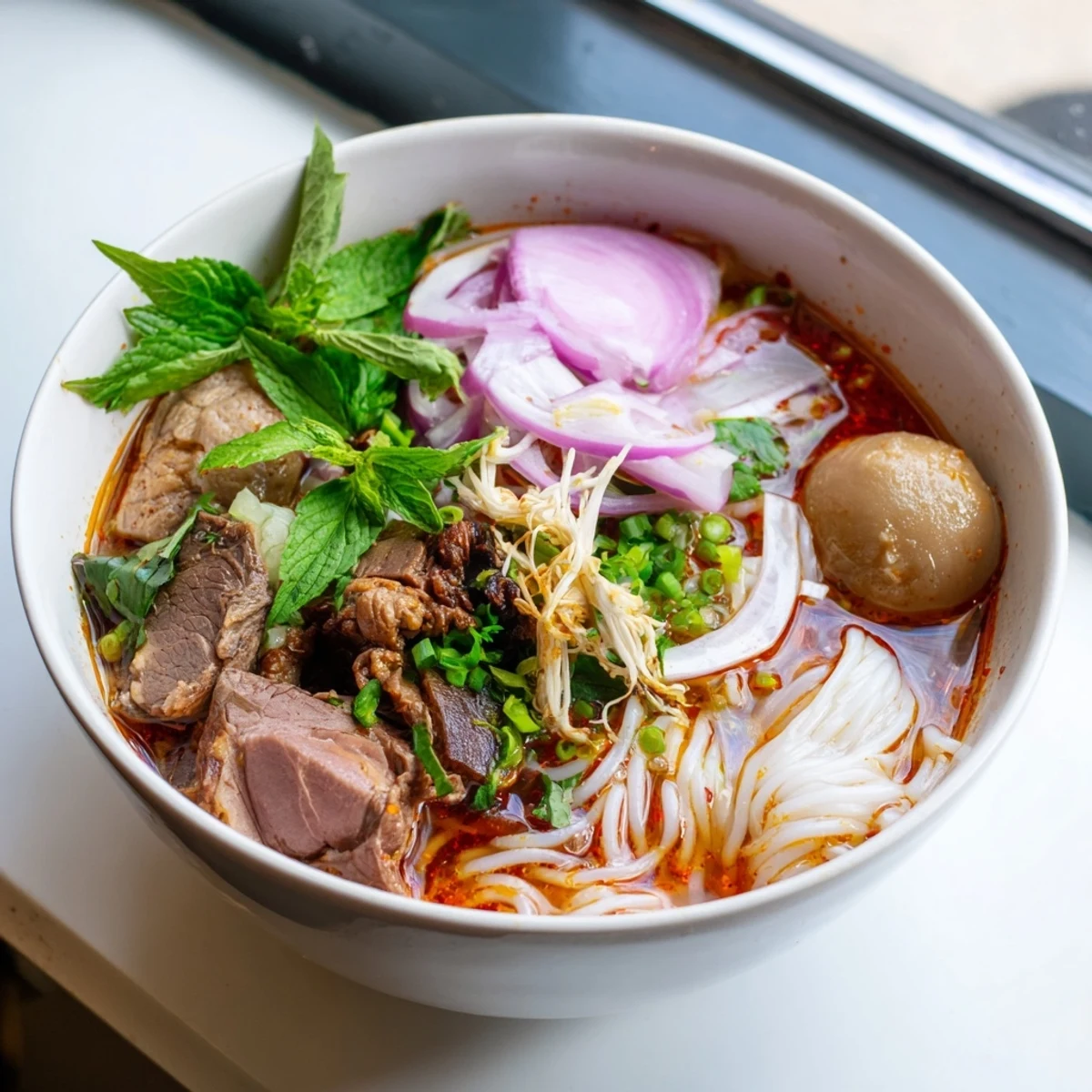
- Cook the thick rice noodles according to package directions then divide among six bowls. Arrange sliced beef brisket pork hock beef shank and cha lua on top of the noodles.
- Bring everything together:
- Ladle the steaming hot broth over the arranged meats and noodles. Drizzle each bowl with the prepared chili oil and serve immediately with the garnish platter alongside.
 Save to Pinterest
 Serving Bún Bò Huế at my winter dinner party last year changed how my guests thought about Vietnamese cuisine. The communal ritual of adding herbs squeezing lime and adjusting heat levels at the table created conversations that lasted long after the bowls were empty.
Making It Your Own
Every cook in Hue has their own secret addition to the broth. Some swear by a piece of pineapple while others add dried shrimp for extra depth. These small variations are what keep home cooking alive and personal.
The Art of Garnishes
Never underestimate how fresh herbs transform a bowl of soup. The contrast between hot spicy broth and cool crisp toppings creates the authentic experience that Vietnamese cuisine celebrates so well.
Timing And Serving Wisdom
This soup rewards preparation but the active cooking time is surprisingly manageable. I often make the broth a day ahead which allows the flavors to meld beautifully and makes assembly effortless.
- Have all garnishes prepped before you start assembling bowls
- Keep the broth at a simmer not a rolling boil while serving
- Offer extra lime wedges on the side for personal adjustment
 Save to Pinterest
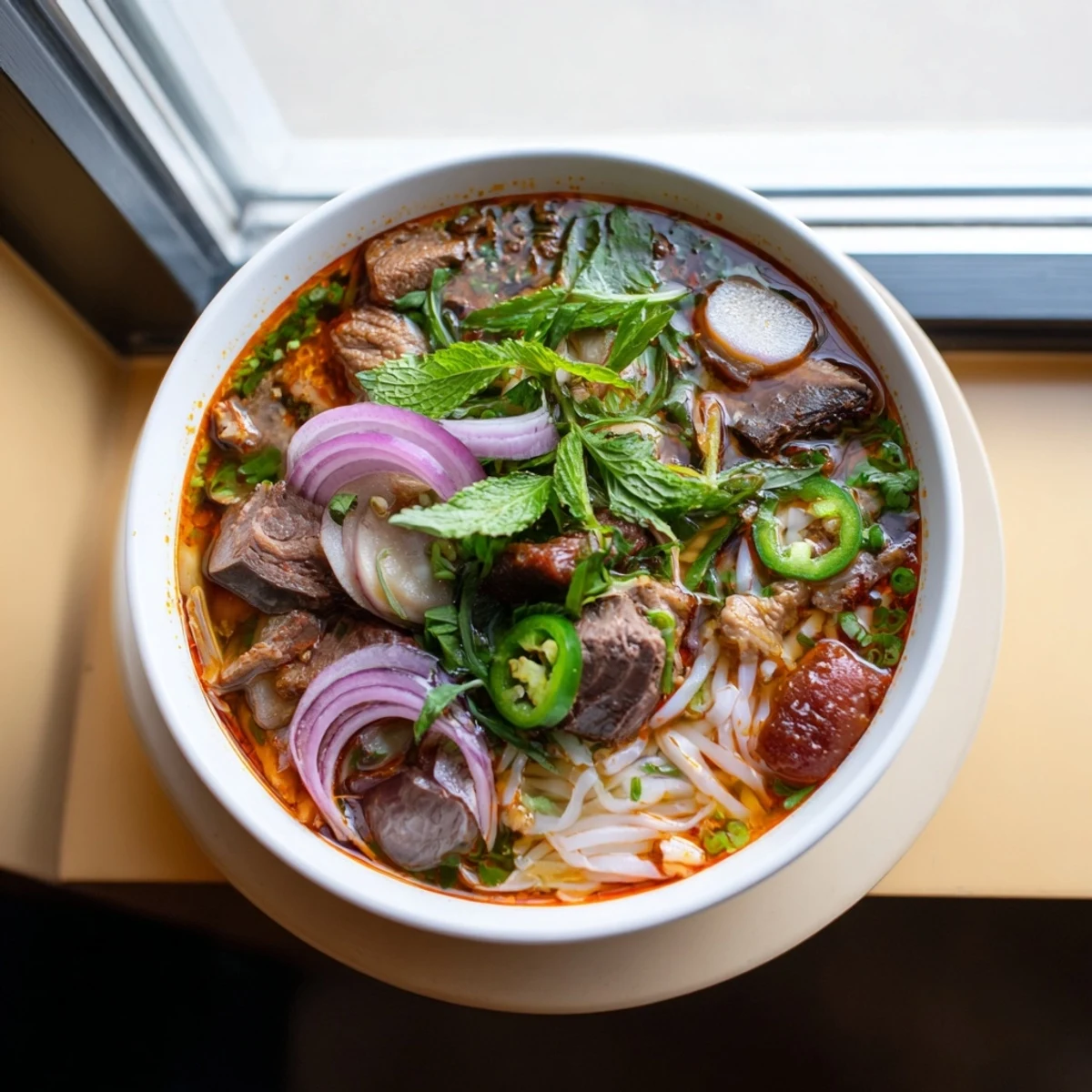
 A bowl of Bún Bò Huế is more than a meal. It is a journey to the imperial city of Hue in every spoonful.
Recipe FAQs
- → What makes Bun Bo Hue different from pho?
-
Bun Bo Hue originates from central Vietnam and features a spicier, more complex broth lemongrass, shrimp paste, and chili oil. The noodles are thicker and rounder than pho noodles, and the dish typically includes pork hock alongside beef.
- → Is shrimp paste essential for the broth?
-
Shrimp paste (mam ruoc) provides the signature depth and umami characteristic of authentic Bun Bo Hue. While you can omit it, the broth will lack the traditional flavor profile that distinguishes this dish.
- → Can I make the broth ahead of time?
-
Absolutely. The broth actually benefits from being made a day ahead, as flavors deepen and meld overnight. Store it refrigerated and remove any solidified fat before reheating for serving.
- → What type of beef works best?
-
Beef shank with bone is ideal for both flavor and the gelatinous texture it provides as it simmers. Beef brisket or flank can be added for additional meat portions, but shank forms the broth's foundation.
- → How spicy is this dish?
-
Traditional Bun Bo Hue delivers moderate heat from aromatic chili oil and fresh bird's eye chilies. You can adjust the spice level by controlling the amount of chili oil added to individual bowls.
- → Are pork blood cubes necessary?
-
Pork blood cubes are traditional but entirely optional. Many home cooks omit them while still creating an authentic version. The dish remains delicious with just the beef and pork components.