
 Save to Pinterest
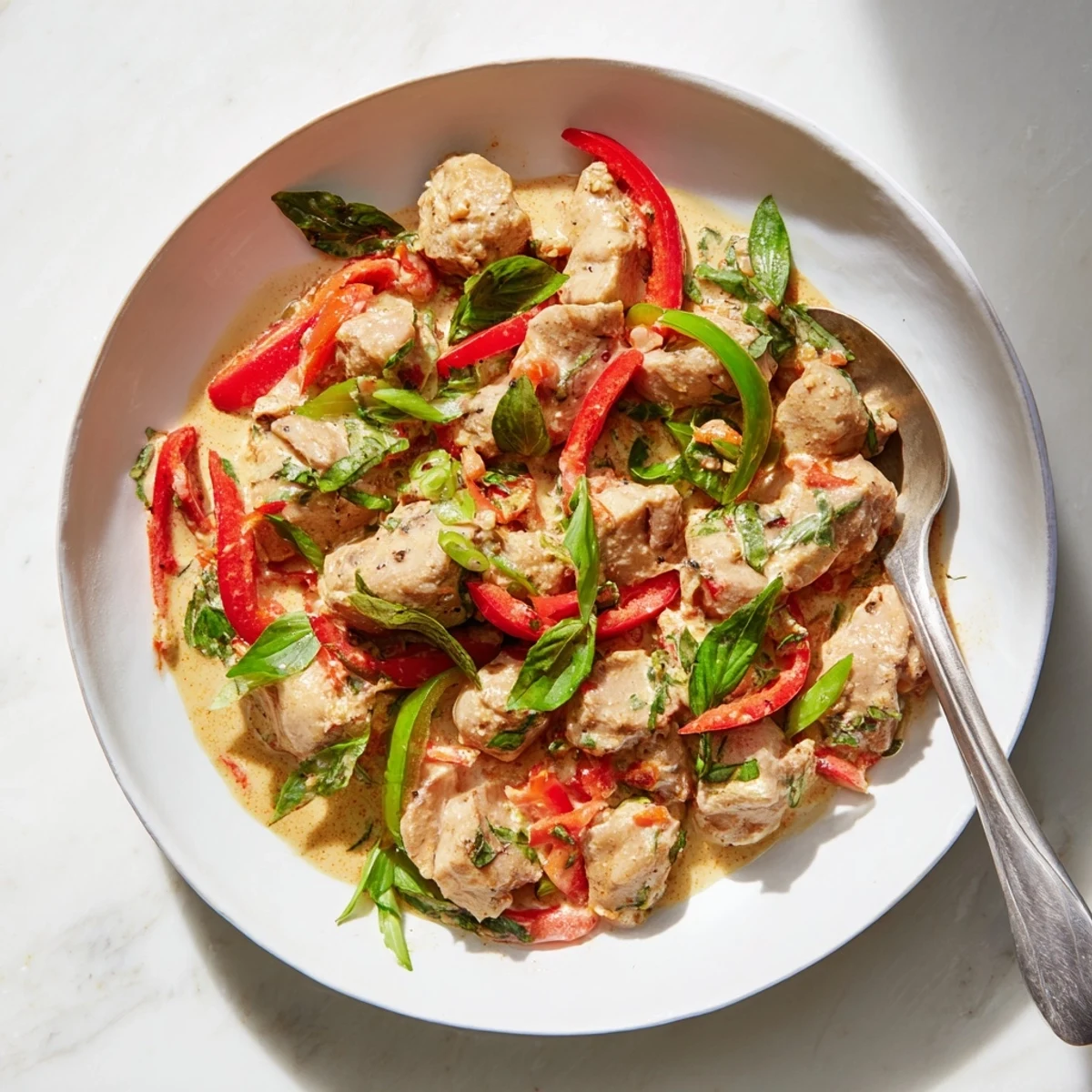
 This Thai-inspired dish combines tender chicken thighs with a luscious coconut curry sauce infused with aromatic spices and fresh basil. The creamy sauce balances the richness of full-fat coconut milk with the bright acidity of lime juice, while red and green bell peppers add sweetness and crunch. Ready in under an hour, this comforting curry delivers layers of flavor from red curry paste, turmeric, coriander, and cumin. Perfect served over steamed jasmine rice for a satisfying weeknight dinner that's both gluten-free and dairy-free.
The first time I made this curry, I was snowed in during a blizzard with nothing but a random assortment of ingredients in my fridge. The coconut milk had been sitting in my pantry for months, and I'd bought red curry paste on impulse without any real plan. That night, with snow piling up against the windows and kitchen lights glowing warm, this dish became one of those happy kitchen accidents that changes everything.
Last summer, my neighbor Sarah stopped by while this was simmering. She ended up staying for dinner, bringing over jasmine rice from her own kitchen, and we ate on my back porch while the fireflies came out. Now whenever I make it, she texts asking if that smell means what she hopes it means.
Ingredients
- 1 1/2 lbs boneless skinless chicken thighs: Thighs stay juicy and tender in the sauce, unlike breasts which can dry out
- 1 medium onion, finely chopped: Creates a sweet foundation that balances the curry heat
- 3 cloves garlic, minced: Fresh garlic makes all the difference, don't use the pre-minced stuff
- 1 tbsp fresh ginger, grated: Peel it with a spoon instead of a knife to waste less
- 1 red bell pepper and 1 green bell pepper, sliced: They add sweetness and crunch that contrasts beautifully with the creamy sauce
- 2 tbsp red curry paste: This is your flavor engine, so buy a good brand from an Asian market if you can
- 1 tsp ground turmeric: Gives the sauce that gorgeous golden-orange color
- 1/2 tsp ground coriander: Adds a subtle citrusy warmth that rounds out the curry paste
- 1/2 tsp ground cumin: Earthy and essential for depth
- 1/2 tsp chili flakes: Optional, but I love the gentle heat that builds slowly
- 1/2 cup fresh basil leaves, torn: Thai basil is ideal with its slight anise notes, but sweet basil works beautifully too
- 2 tbsp fresh cilantro, chopped: Some people love it, some people hate it, make it optional
- 1 (14 oz) can coconut milk (full fat): Don't use lite coconut milk, you need the fat for proper sauce texture
- 1/2 cup chicken broth: Helps thin the sauce slightly without sacrificing richness
- 2 tbsp fish sauce: The secret ingredient that adds umami without tasting fishy
- 1 tbsp soy sauce: Use gluten-free if needed, adds salt and depth
- 1 tsp brown sugar: Just enough to balance the acidity and heat
- Juice of 1 lime: Brightens everything and cuts through the coconut richness
- 2 tbsp vegetable oil: For cooking the aromatics and browning the chicken
- Salt and pepper, to taste: Season lightly since the sauces are already salty
Instructions
- Heat the pan and start the aromatics:
- Heat 2 tbsp vegetable oil in a large skillet or wok over medium-high heat until it shimmers, then add your chopped onion and sauté for 2 minutes until it turns translucent and soft
- Add the fragrant foundation:
- Stir in the minced garlic and grated ginger, cooking for just 1 minute until you can smell them throughout your kitchen
- Soften the peppers:
- Add the sliced red and green bell peppers and cook for another 2 minutes until they start to glisten but still have some crunch
- Brown the chicken:
- Push all the vegetables to the sides of the pan, add the chicken pieces to the center, season lightly with salt and pepper, and sauté for 4-5 minutes until lightly browned on the outside
- Bloom the spices:
- Stir in the red curry paste, turmeric, coriander, cumin, and chili flakes, cooking for 1-2 minutes until the paste darkens slightly and becomes incredibly fragrant
- Create the sauce:
- Pour in the coconut milk and chicken broth, then add the fish sauce, soy sauce, and brown sugar, stirring well to combine everything into a smooth, reddish-orange sauce
- Simmer to perfection:
- Let everything simmer uncovered for 10-12 minutes until the chicken is cooked through and the sauce has thickened slightly, coating the back of a spoon
- Finish with fresh brightness:
- Stir in the lime juice and most of the basil leaves (save a few for garnish), then taste and adjust seasoning as needed
- Serve and garnish:
- Serve hot over steamed jasmine rice, topped with the remaining basil and cilantro if you're using it
 Save to Pinterest
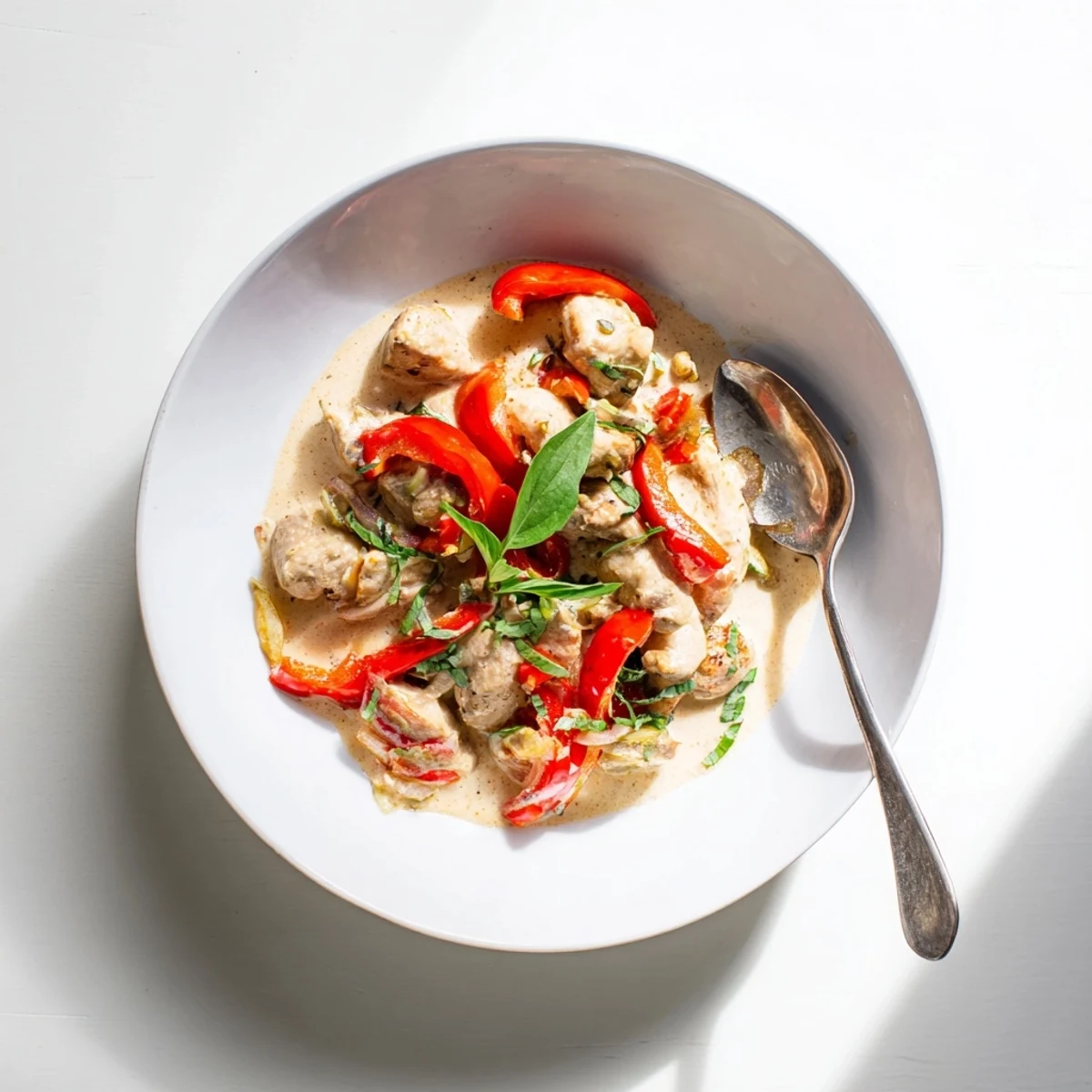
 My friend's daughter, who usually won't eat anything with sauce, asked for thirds when I made this for their family dinner. Sometimes the simplest combinations of coconut and curry are the most convincing.
Making It Your Own
I've tried swapping in cauliflower and sweet potatoes for a vegetarian version, and while it's delicious, the sauce needs an extra 5 minutes to thicken without the chicken juices. For extra protein, throw in some edamame or cashews during the last few minutes of simmering.
The Heat Factor
Red curry paste varies wildly between brands, so start with what the recipe calls for and taste before adding more. I once made a batch that had me fanning my mouth for an hour, and I actually love spicy food.
Perfect Pairings
Jasmine rice is non-negotiable for me, but naan bread for soaking up that sauce is a worthy alternative. A crisp Sauvignon Blanc cuts through the richness, or go traditional with a cold Thai lager like Singha or Chang.
- Make extra sauce because leftover rice and curry the next day might be even better
- Fresh lime wedges on the table let everyone brighten their bowl to taste
- The flavors develop overnight, so this meal prep champion
 Save to Pinterest
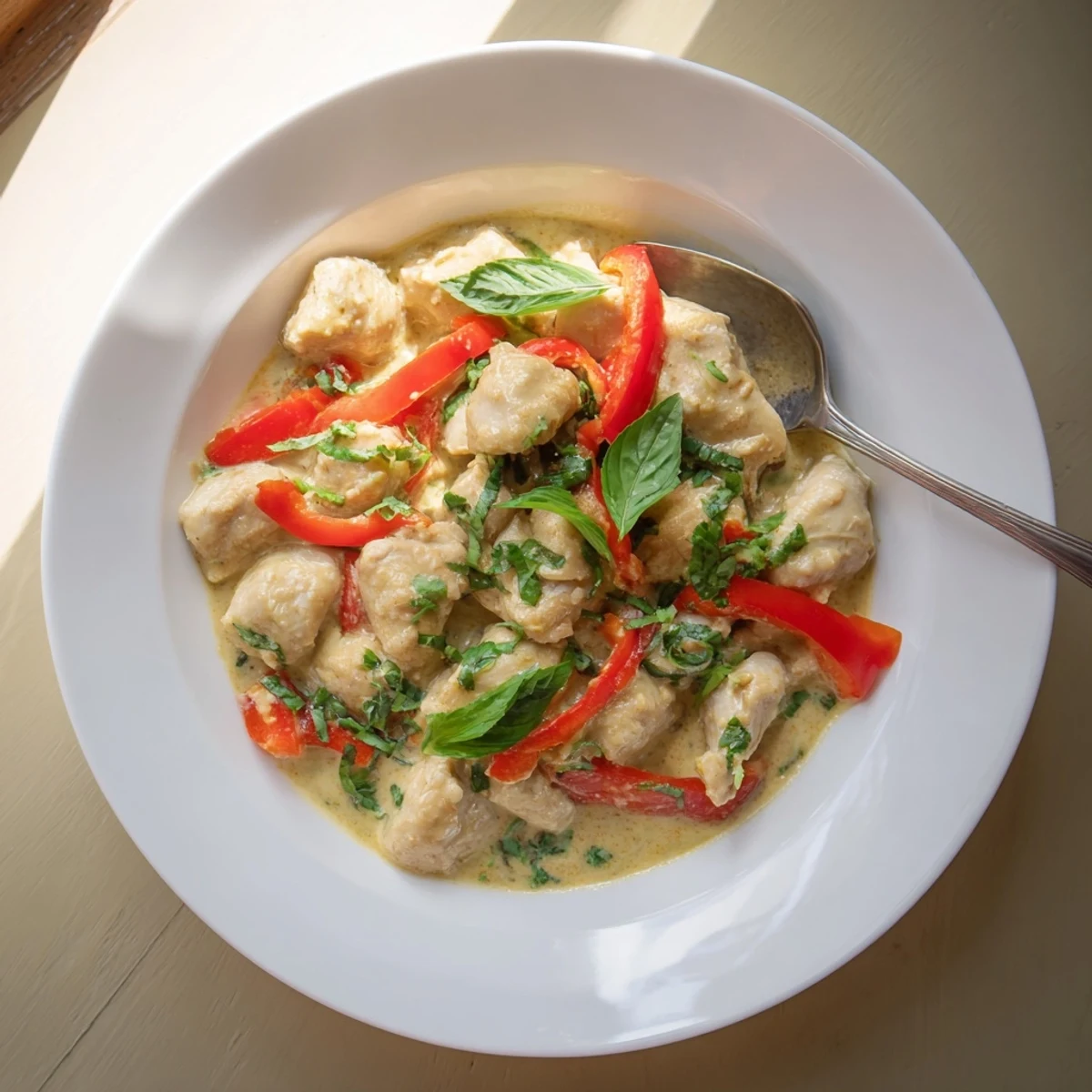
 There's something about this curry that makes people linger at the table longer than usual, and I think that's exactly what dinner should be about.
Recipe FAQs
- → Can I make this curry ahead of time?
-
Absolutely. The flavors actually improve when allowed to meld overnight. Store in an airtight container in the refrigerator for up to 3 days. Reheat gently over medium-low heat, adding a splash of coconut milk if the sauce has thickened too much.
- → What can I substitute for fish sauce?
-
For a vegetarian version, use soy sauce or tamari combined with a pinch of seaweed flakes or mushroom soy sauce to replicate the umami depth. You can also use vegetarian fish sauce alternatives available at Asian grocers.
- → How spicy is this dish?
-
The heat level is medium thanks to the red curry paste and optional chili flakes. You can easily adjust the spiciness by reducing the curry paste or omitting the chili flakes. For more heat, add fresh Thai chilies or increase the chili flakes.
- → Can I use chicken breast instead of thighs?
-
Yes, chicken breast works well though it's leaner. Cut it into similar-sized pieces and reduce the simmering time to 8-10 minutes to prevent drying. Thighs are preferred for their juiciness and ability to withstand longer cooking without becoming tough.
- → Is there a dairy-free alternative if I can't use coconut milk?
-
You could use cashew cream or almond milk blended with a bit of tapioca starch for thickening, though the flavor profile will change significantly. For the closest result, use a coconut-free creamy curry base made with puréed cashews and vegetable broth.
- → What other vegetables can I add?
-
Snow peas, bamboo shoots, baby corn, or eggplant work beautifully. Add hearty vegetables like eggplant earlier with the peppers, while delicate vegetables like snow peas should go in during the last 3-4 minutes of simmering.