
 Save to Pinterest
 This Asian salmon grain bowl brings together tender, honey-soy glazed salmon fillets with wholesome brown rice or quinoa and a rainbow of fresh vegetables. The salmon marinates in a bold mixture of soy sauce, sesame oil, ginger, and garlic, then broils until caramelized and flaky.
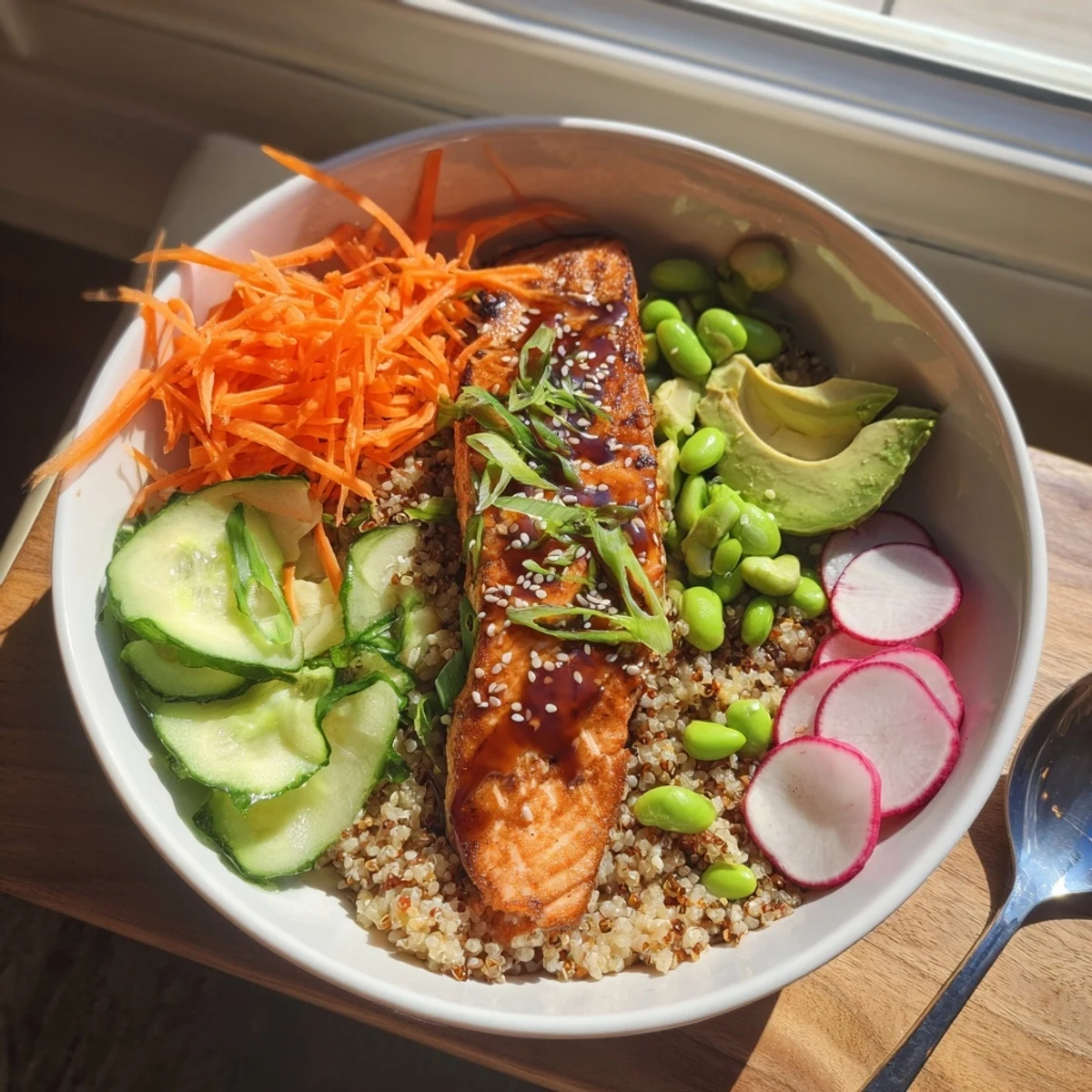
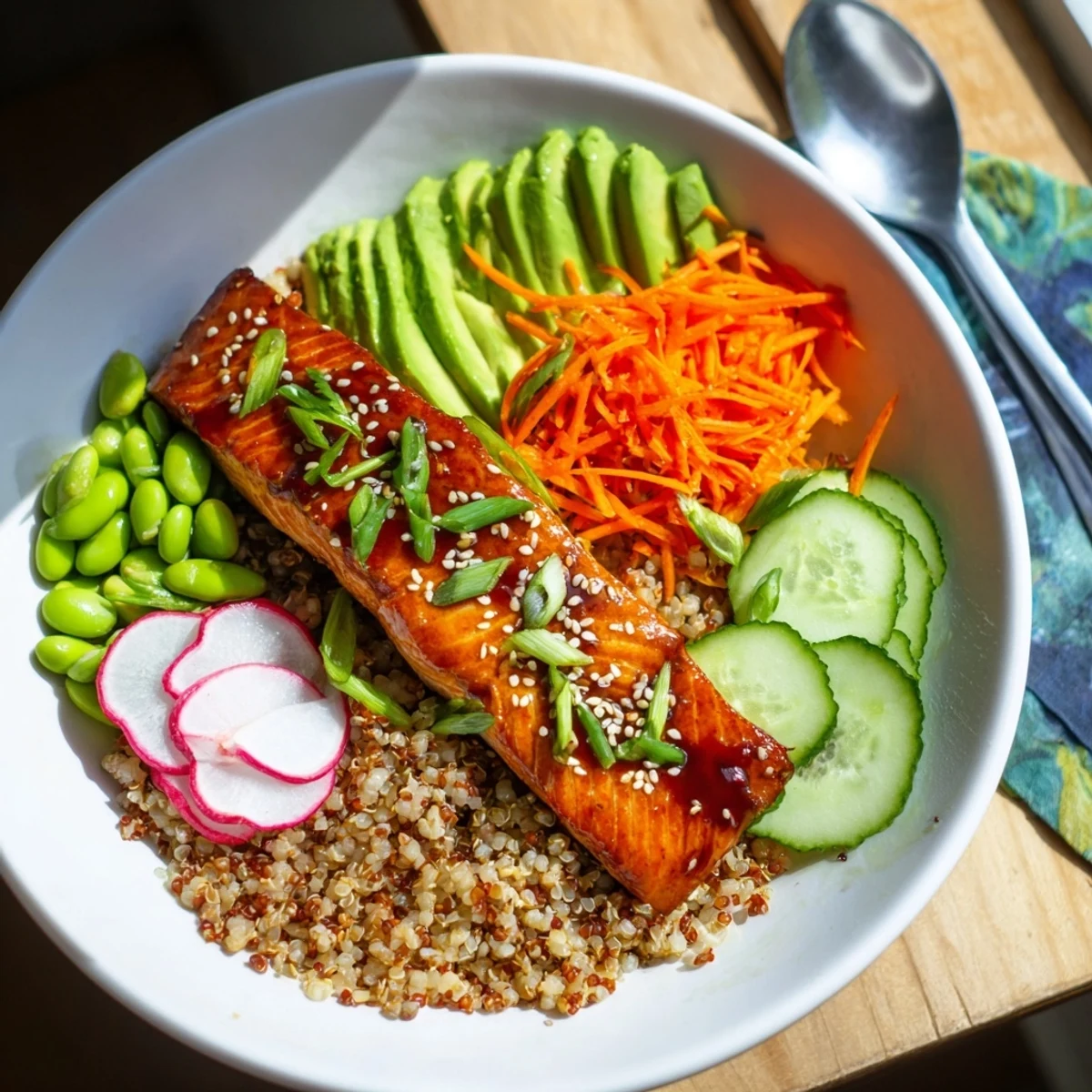
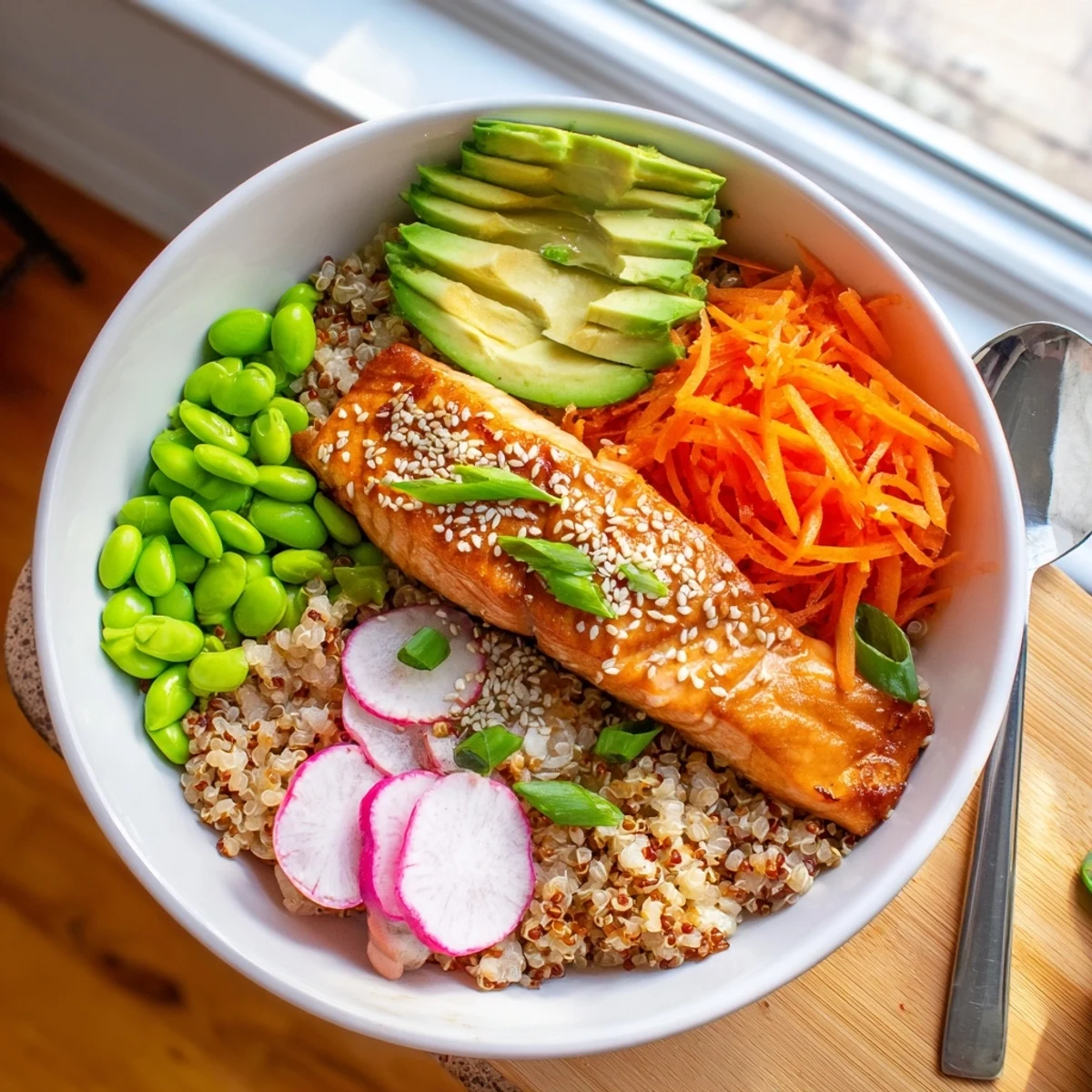
Each bowl is layered with shredded carrots, cool cucumber, buttery avocado, crisp radishes, and protein-packed edamame, finished with a bright lime and sesame dressing. Ready in just 40 minutes, it's a complete, nourishing meal that works equally well for weeknight dinners or meal prep.
The sizzle of salmon hitting a hot pan on a Tuesday evening changed my entire weeknight dinner game forever. I had been stuck in a rut of sad salads and reheated pasta until a friend brought over a grain bowl from a local spot and I thought, I can absolutely make this better at home. The secret turned out to be that sticky, savory glaze that caramelizes under the broiler while the rest of the bowl comes together almost effortlessly. Now this dish shows up on my table at least twice a month, rain or shine.
One Saturday I made these bowls for three friends who had come over expecting pizza, and by the end of the night they were all asking for the recipe and scraping the last grains from their bowls. My friend David, who claims he does not like fish, went back for seconds without a hint of shame. There is something about the combination of that caramelized glaze, the cool crunch of cucumber, and the creamy avocado that makes people forget they are eating something nourishing. I have never had leftovers when serving this, not once.
Ingredients
- Salmon and Marinade: Four skinless fillets around 150 grams each soak up the glaze beautifully, and the marinade of soy sauce, honey, sesame oil, rice vinegar, grated ginger, minced garlic, and optional sriracha creates that irresistible sticky caramelization.
- Grains: One cup of brown rice, quinoa, or a grain blend cooked in two cups of water with half a teaspoon of salt forms the hearty base that ties everything together.
- Vegetables and Toppings: Shredded carrots, thinly sliced cucumber, cooked shelled edamame, sliced avocado, thinly sliced radishes, scallions, sesame seeds, and optional fresh cilantro or mint bring color, crunch, and freshness to every bite.
- Dressing: A quick whisk of soy sauce, rice vinegar, lime juice, honey, and toasted sesame oil drizzled at the end brightens the whole bowl and ties every element together.
Instructions
- Whisk the marinade together:
- In a small bowl, combine the soy sauce, honey, sesame oil, rice vinegar, ginger, garlic, and sriracha if using, whisking until the honey dissolves and everything smells deeply savory and slightly sweet.
- Let the salmon soak:
- Arrange the fillets in a shallow dish and pour the marinade over them, making sure each piece is coated evenly, then let them sit for 15 to 20 minutes while you handle the rest.
- Cook the grains:
- Rinse your chosen grain, combine it with water and salt in a saucepan, bring it to a boil, then reduce the heat, cover, and simmer until tender and the water is absorbed, about 15 to 20 minutes for brown rice.
- Broil or grill the salmon:
- Preheat your broiler or grill to medium high, place the marinated fillets on a lined tray, and cook for 6 to 8 minutes until the top is caramelized and the fish flakes easily with a fork.
- Stir the dressing:
- In a small bowl, whisk together the soy sauce, rice vinegar, lime juice, honey, and toasted sesame oil until smooth and well combined.
- Build the bowls:
- Divide the fluffy grains among four bowls, arrange the carrots, cucumber, edamame, avocado, and radishes around the edges, and place a salmon fillet on top of each.
- Finish and serve:
- Drizzle the dressing generously over each bowl, scatter with scallions, sesame seeds, and fresh herbs if you have them, then serve right away while the salmon is still warm.
 Save to Pinterest
 I remember packing the leftovers of this bowl into a container for lunch the next day and eating it cold at my desk, surprised by how the flavors had deepened overnight. The grain soaked up the dressing like a sponge and the salmon, even chilled, tasted rich and satisfying. It was one of those small moments where food made an ordinary afternoon feel a little special.
Choosing the Right Grain
Brown rice gives you that chewy, nutty foundation that holds up beautifully against the bold flavors of the glaze and dressing. Quinoa cooks faster and adds a light, fluffy texture that some people actually prefer for warmer weather. Farro is a lesser known option that brings an unexpected heartiness and a slightly earthy flavor worth exploring if you feel adventurous. Whatever you choose, rinse it well before cooking to remove any bitterness.
Swapping the Vegetables
The beauty of a grain bowl is its flexibility, and I have made this with everything from roasted sweet potatoes in winter to raw sugar snap peas in summer. Thinly sliced bell peppers add a satisfying crunch, while quick pickled red onions bring a tangy punch that cuts through the richness of the salmon. Frozen edamame works perfectly fine if fresh is not available, just thaw and pat it dry before adding.
Getting the Salmon Right
The difference between good salmon and great salmon in this recipe comes down to trusting the broiler and not overcooking the fish. You want it just opaque in the center with that gorgeous dark glaze on top, which means pulling it out when it still looks slightly underdone in the thickest part. It will carryover cook for another minute on the tray.
- Pat the salmon dry before marinating so the glaze adheres properly instead of sliding off.
- Line your baking tray with parchment or foil for a cleanup that takes thirty seconds.
- Let the cooked salmon rest for two minutes before placing it on the bowl so the juices redistribute and do not flood your grains.
 Save to Pinterest
 This bowl has a way of making a random Wednesday feel like you treated yourself to something from a restaurant, and that is really all I ever want from cooking at home. Share it with someone you like, or keep it all to yourself, no judgment either way.
Recipe FAQs
- → Can I use frozen salmon fillets instead of fresh?
-
Yes, frozen salmon works well. Thaw it completely in the refrigerator overnight before marinating. Pat the fillets dry with paper towels to ensure the marinade adheres properly and you get a good sear under the broiler.
- → What grains work best as the base?
-
Brown rice, quinoa, or farro all work beautifully. Brown rice offers a chewy, nutty foundation, quinoa cooks faster and adds extra protein, while farro brings a satisfying rustic texture. Use whichever you prefer or have on hand.
- → How do I know when the salmon is perfectly cooked?
-
The salmon is done when it flakes easily with a fork and reaches an internal temperature of 145°F (63°C). Under the broiler, this typically takes 6 to 8 minutes depending on thickness. The glaze should be bubbly and slightly caramelized on top.
- → Can I prepare any components ahead of time?
-
Absolutely. Cook the grains up to three days in advance and store in the refrigerator. You can also prep the dressing, slice the vegetables, and mix the marinade ahead of time. Marinate the salmon for no longer than 20 minutes to keep the texture firm and flavorful.
- → Is there a good substitute for soy sauce to make this gluten-free?
-
Tamari is an excellent gluten-free alternative that delivers the same deep umami flavor. Coconut aminos also work as a soy-free option, though the result will be slightly sweeter and less salty.
- → What can I use instead of salmon for a plant-based version?
-
Extra-firm tofu pressed and cubed makes a great substitute. Brush it with the same marinade and bake or pan-fry until golden. Tempeh is another hearty option that pairs well with the Asian flavors and absorbs the glaze nicely.